
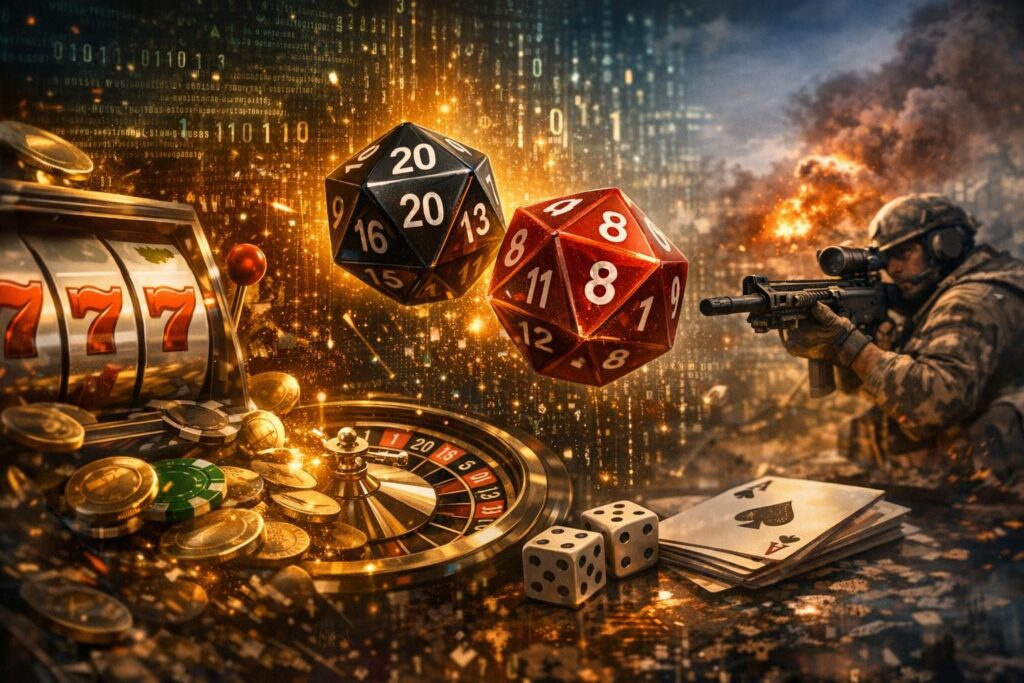
Ever felt like the game universe is conspiring against you? You miss five critical hits in a row, open twenty loot boxes without a single legendary, or watch slot reels stop just one symbol away from a jackpot. Your first instinct screams “this RNG is rigged!” But before you rage-quit and uninstall, let’s dive deep into how random number generators actually work in gaming and why our brains trick us into seeing patterns where none exist.
Understanding Random Number Generators in Gaming
Random number generation forms the backbone of modern gaming experiences. Whether you’re spinning reels on online slots, farming rare drops in MMORPGs, or navigating procedurally generated dungeons in roguelike adventures, RNG dictates your outcomes. But what exactly happens behind those loading screens?
A random number generator continuously produces numerical sequences using complex mathematical algorithms. These aren’t truly random in the philosophical sense—they’re pseudorandom, meaning they follow predetermined formulas that create unpredictable patterns. The moment you press that button or trigger that action, the system captures the current number in the sequence and translates it into game outcomes.
How RNG Operates Across Different Game Types
Different gaming genres implement randomness in unique ways:
- Slot machines: Each spin represents an independent event. The generator assigns numbers to specific reel positions, determining symbol combinations. Your previous spin has zero influence on the next one—mathematical independence at its finest.
- RPG loot systems: When you defeat an enemy, the game rolls against preset probability tables. A common wolf might have a ninety percent chance to drop regular pelts and a four percent chance for rare fangs. The code essentially asks “is this random number below the threshold?”
- Procedural generation: Games like Minecraft or Binding of Isaac use seed values—starting numbers that determine entire world layouts. Same seed equals identical worlds, different seeds create endless variety.
- Combat calculations: Critical hits, dodge chances, and damage variance all rely on RNG checking against your character statistics every single encounter.
Why Random Outcomes Feel Manipulated
Here’s the uncomfortable truth: your brain wasn’t designed to understand probability. Evolution optimized us for pattern recognition, not statistical analysis. This creates fascinating psychological conflicts when facing truly random systems.
The Gambler’s Fallacy Trap
After losing ten consecutive rounds, you feel absolutely certain a win must be coming. This cognitive error—known as the gambler’s fallacy—assumes past results influence future probabilities in independent events. Flip a coin ten times and get heads every time? The eleventh flip still has exactly fifty percent odds for either outcome. The coin doesn’t remember, care, or compensate.
Gaming applications of this fallacy include:
- Believing you’re “due” for a legendary drop after opening numerous loot boxes
- Thinking slot machines become “hot” or “cold” based on recent payouts
- Assuming critical hit streaks must balance out with miss streaks
Return to Player and Volatility Confusion
Online slots advertise RTP percentages—typically between ninety-four and ninety-eight percent. Many players misunderstand this metric. A ninety-six percent RTP doesn’t mean you’ll get back ninety-six dollars from every hundred wagered in your session. This percentage represents theoretical returns across millions of spins.
Volatility adds another complexity layer:
- Low volatility: Frequent small wins creating steadier gameplay but lower maximum payouts
- High volatility: Rare but substantial wins with longer dry spells between payouts
- Medium volatility: Balanced approach offering moderate win frequency and payout sizes
During a hundred-spin session on a high volatility slot, you might experience seventy percent or one hundred thirty percent returns despite the advertised ninety-six percent RTP. Short-term variance doesn’t indicate manipulation—it demonstrates probability in action.
Confirmation Bias in Gaming
We remember dramatic failures more vividly than routine successes. Missing a crucial ninety-five percent accuracy shot during a boss fight burns into memory, while landing twenty consecutive normal hits fades into background noise. This selective memory reinforces suspicions about rigged systems when they’re functioning exactly as designed.
Verifying RNG Fairness and Legitimacy
Legitimate gaming companies can’t afford rigged systems—their reputations and licenses depend on provable fairness. Multiple safeguards exist to ensure random number generation remains unbiased.
Third-Party Testing and Certification
Independent laboratories analyze gaming software before public release. Organizations like eCOGRA, iTech Labs, and Gaming Laboratories International run millions of simulated game rounds, checking for statistical anomalies. Certified games display testing seals prominently, providing transparency about their fairness standards.
These audits examine:
- Algorithm quality and randomness distribution
- Actual RTP matching advertised percentages
- Security measures preventing manipulation
- Compliance with regional gaming regulations
Algorithmic Sophistication
Modern pseudorandom number generators use algorithms like Mersenne Twister, producing sequences with periods exceeding two to the power of nineteen thousand. Breaking or predicting these patterns requires computational resources beyond individual capability. The seed values continuously change, eliminating predictability even if someone discovered the underlying algorithm.
Can Players or Companies Manipulate RNG?
Player manipulation is essentially impossible in properly designed systems. Server-side generation means calculations happen beyond user reach. Companies face severe consequences for rigging certified games—license revocation, legal action, and permanent reputation damage. The financial risk of cheating far exceeds any short-term profit incentive.
Smart Strategies for Gaming with RNG
Understanding randomness helps you make informed decisions and maintain realistic expectations. While you can’t control outcomes, you can optimize your approach.
Know Your Probabilities
Research actual drop rates, hit percentages, and payout structures before investing time or money. A one percent legendary rate means you’ll average one success per hundred attempts—but you might need two hundred tries or get lucky on attempt five. Both scenarios fit within normal probability distributions.
Bankroll Management Principles
Never wager resources you can’t afford to lose, whether that’s real currency in online slots or valuable in-game items. Divide your budget into smaller units, accepting that variance might eliminate portions during unlucky streaks. This approach extends your playing time and smooths out statistical fluctuations.
Recognize Tilt and Take Breaks
Emotional decision-making after bad luck leads to worse outcomes. When frustration builds, step away. Your next attempt has identical odds whether you continue immediately or return tomorrow. Fresh perspective prevents chasing losses and maintains gaming enjoyment.
Choose Games Strategically
Higher RTP slots offer better long-term value. Games advertising ninety-seven percent returns mathematically outperform ninety-four percent options over extended play. Match volatility to your preferences—steady entertainment versus jackpot hunting—rather than assuming one approach is universally superior.
The Benefits of Randomness in Game Design
Despite frustrations, RNG creates irreplaceable gaming value. Imagine role-playing games where every enemy dropped identical loot or roguelikes with unchanging level layouts. Predictability kills replayability.
Random elements provide:
- Excitement and anticipation: Uncertain outcomes trigger dopamine responses, making victories feel earned and memorable
- Infinite variety: Procedural generation creates unique experiences without requiring developers to hand-craft countless scenarios
- Balanced progression: Randomized rewards prevent players from optimizing fun out of games through predictable farming routes
- Shared experiences: Communities bond over incredible luck stories and commiserate about terrible RNG moments
Developers carefully tune randomness to maximize engagement. Too much RNG creates frustration and feelings of helplessness. Too little breeds boredom and predictability. The sweet spot varies by genre—competitive multiplayer minimizes randomness to emphasize skill, while casual games embrace it for accessibility.
Making Peace with Probability
Random number generation isn’t your enemy conspiring against personal success. It’s a neutral mathematical system creating dynamic gaming experiences. Understanding how probability actually functions—versus how our brains perceive it—transforms frustration into acceptance.
Next time you experience an unlucky streak, remember: the system isn’t rigged, you’re not cursed, and your luck hasn’t permanently changed. You’re simply witnessing normal statistical variance. Those incredible moments when everything clicks? They emerge from the same random systems that occasionally produce dry spells.
Play smart, manage expectations, and appreciate the unpredictability that keeps games exciting after hundreds of hours. The occasional frustration is the price we pay for those unforgettable moments when RNG delivers exactly what we needed at the perfect time.
Frequently Asked Questions
Can I predict RNG outcomes by timing my button presses?
No. Modern random number generators cycle through values thousands of times per second using algorithms impossible to track mentally. Your reaction time can’t influence which number gets selected. Any perceived patterns result from coincidence and confirmation bias rather than actual predictability.
Do online slots pay better at certain times of day?
Absolutely not. Certified slot machines maintain consistent RTP percentages regardless of time, date, or how many players are active. Each spin represents an independent event with identical odds. Casinos have no incentive or mechanism to adjust difficulty based on temporal factors.
Why do I see the same rare drops multiple times then nothing for hours?
This phenomenon called clustering occurs naturally in random distributions. Flip a coin one hundred times and you’ll likely see several streaks of consecutive heads or tails despite fifty percent individual probability. Our brains expect even distribution, but true randomness produces clumps and gaps.
Are free-to-play loot boxes rigged compared to premium games?
Legitimate free-to-play titles use identical RNG standards as premium games. However, some companies disclose rates more transparently than others. Check for published drop percentages and third-party certifications. Reputation matters—established developers can’t risk scandals over manipulated probabilities.
How many attempts does it take to get a one percent drop?
While average expectation is one hundred attempts, probability doesn’t guarantee results. You have approximately sixty-three percent chance of receiving at least one drop within one hundred tries. Some players succeed on attempt three, others need three hundred. Both outcomes fit within normal variance for one percent rates.
Can developers see my RNG results and adjust difficulty?
Certified systems generate random numbers independently from player profiles. While some games implement dynamic difficulty adjustment based on performance metrics, this differs from manipulating random outcomes. Reputable companies separate RNG systems from player data to maintain fairness and regulatory compliance.