
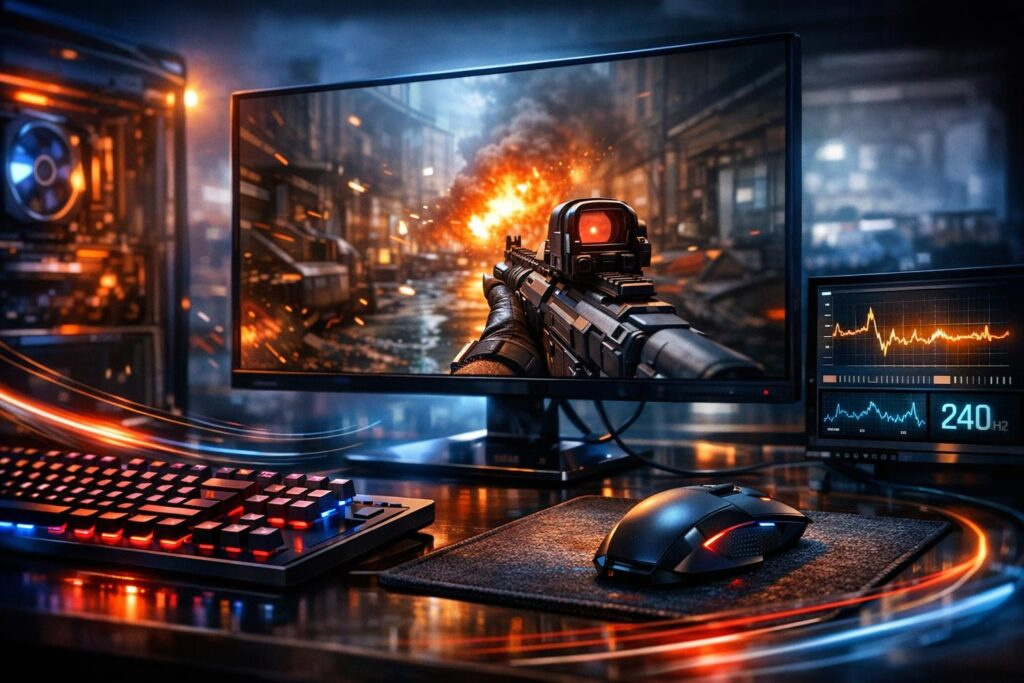
Every gamer knows that frustrating moment when you click, tap, or press a button, but your character responds just a split second too late. That tiny delay between your action and what happens on screen? That’s input delay, and it’s silently sabotaging your performance. Whether you’re landing headshots in competitive shooters or executing frame-perfect combos in fighting games, reducing input lag can mean the difference between victory and defeat. The best part? You don’t need expensive hardware upgrades to see dramatic improvements.
Input delay, also known as input lag, typically ranges from 15 to 100 milliseconds depending on your setup. While that sounds microscopic, at competitive levels, even 10-20ms matters. Professional esports players optimize every millisecond because they understand that lower latency gaming translates directly to better reaction times and tighter control. This comprehensive guide will walk you through proven techniques to minimize input lag across PC, console, and television setups.
Understanding What Causes Input Delay
Before diving into solutions, let’s quickly break down where input lag actually comes from. The journey from your fingertip to the screen involves multiple steps: your peripheral sends signals to your system, the game processes those inputs, the GPU renders frames, and finally your display shows the result. Each stage adds milliseconds. Modern displays often apply image processing that makes movies look great but adds significant delay for gaming. Similarly, wireless connections, background applications, and graphics settings all contribute to the total latency you experience.
Display Optimization: Your First Line of Defense
Your monitor or television is often the single biggest contributor to input lag, but it’s also where you can make the most dramatic improvements with simple settings adjustments.
Activate Game Mode Immediately
Nearly every modern television and many monitors include a dedicated Game Mode setting buried somewhere in the menus. This single toggle can shave 20-40 milliseconds off your input delay instantly. Game Mode works by disabling post-processing features like motion smoothing, noise reduction, and image enhancement that add computational delays. Yes, your image might lose a tiny bit of visual polish, but the responsiveness gain is absolutely worth the trade-off for competitive play.
Maximize Your Refresh Rate
Refresh rate directly impacts how quickly your display can show new information. A 60Hz display updates every 16.7 milliseconds, while a 144Hz monitor refreshes every 6.9 milliseconds. That’s nearly 10ms saved just from display refresh alone. If your monitor supports 144Hz or higher, make absolutely certain you’ve enabled it in your operating system display settings. Many gamers unknowingly run high-refresh monitors at default 60Hz because they forgot to change this setting.
- Check Windows display settings and set maximum refresh rate
- Verify in-game settings match your display capability
- Use DisplayPort or HDMI 2.1 cables capable of high refresh rates
- Avoid daisy-chaining adapters or using outdated cables
Enable Variable Refresh Rate Technology
Technologies like NVIDIA G-Sync and AMD FreeSync synchronize your display’s refresh with your GPU’s frame output. This eliminates screen tearing without the input lag penalty that traditional V-Sync introduces. If your hardware supports VRR, enable it through your GPU control panel and ensure your display’s corresponding feature is active. Just remember to disable V-Sync in your games when using these technologies.
Graphics Settings and Frame Rate Management
The relationship between frame rate and input lag is direct and powerful. Higher frame rates mean your game engine processes inputs more frequently and sends updated visuals to your display faster, creating a tighter feedback loop between your actions and what you see.
The Frame Rate Sweet Spot
You have two valid approaches here. First option: cap your frame rate slightly below your refresh rate for maximum stability. On a 144Hz monitor, cap at 141-142 FPS. This prevents frame time variance that can cause stuttering and inconsistent input response. Second option: push frame rates as high as possible, even beyond your refresh rate. A game running at 200 FPS on a 144Hz display still feels more responsive than one locked at 144 FPS because the frames being displayed are more recent. Test both approaches to see which feels better for your specific setup.
Eliminate V-Sync Completely
Traditional vertical sync forces your GPU to wait for display refresh before sending frames, adding at least one frame of latency. That’s 16.7ms at 60Hz or 6.9ms at 144Hz added unnecessarily. Disable V-Sync in both your game settings and GPU control panel. If screen tearing bothers you, use G-Sync or FreeSync instead, or simply push frame rates high enough that tearing becomes imperceptible.
Optimize Graphics Quality for Performance
Competitive gamers prioritize frame rate over visual fidelity for good reason. Reducing graphics settings increases frame rate, which reduces input lag. Focus on these high-impact adjustments:
- Lower shadow quality or disable dynamic shadows entirely
- Reduce anti-aliasing or switch to faster methods like FXAA
- Disable motion blur, depth of field, and ambient occlusion
- Lower texture quality if GPU memory limited
- Reduce view distance in open-world games
GPU-Specific Low Latency Features
Modern graphics cards include dedicated technologies designed specifically to reduce input lag. NVIDIA Reflex and AMD Anti-Lag optimize the rendering pipeline to minimize the time between input and frame delivery. Enable NVIDIA Reflex in supported games for the best results. In NVIDIA Control Panel, set Low Latency Mode to “Ultra” or at minimum reduce Maximum Pre-Rendered Frames to 1. AMD users should enable Radeon Anti-Lag in their driver software.
Peripheral Connection and Configuration
Your mouse, keyboard, and controller are the starting points of the input chain. Optimizing them removes latency right at the source before it can compound through the rest of your system.
Wired Connections Always Win
Wireless technology has improved dramatically, but physics still matters. Bluetooth adds approximately 5-15 milliseconds of latency compared to wired connections. For competitive gaming, use USB cables for your mouse and keyboard. Even premium wireless gaming mice with proprietary 2.4GHz connections add 1-3ms compared to wired. If you must use wireless, at least ensure you’re using gaming-grade wireless technology, not standard Bluetooth.
Polling Rate Matters More Than You Think
Polling rate determines how often your peripheral reports its position to your computer. A mouse at 125Hz polling rate sends updates every 8 milliseconds, while 1000Hz sends updates every single millisecond. That’s a potential 7ms improvement just from adjusting one setting. Access your peripheral’s software (Logitech G Hub, Razer Synapse, SteelSeries Engine, etc.) and set polling rate to maximum, typically 1000Hz or 8000Hz on newer devices.
DPI and Sensitivity Optimization
Higher DPI settings on mice can marginally reduce latency because the sensor updates with more precision per polling cycle. Increasing from 400 DPI to 1600 or 3200 DPI can save 2-5 milliseconds. Just remember to lower your in-game sensitivity proportionally to maintain the same physical movement-to-screen distance ratio. This gives you the latency benefit without changing your muscle memory.
System-Level Optimizations
Your operating system and background processes can introduce surprising amounts of latency through CPU scheduling delays and resource competition.
Update Everything Regularly
Manufacturers constantly refine device firmware and drivers to improve performance and reduce latency. Keep your graphics drivers updated, along with motherboard chipset drivers, peripheral firmware, and even your BIOS when significant updates release. These updates often include specific gaming optimizations that reduce processing overhead.
Disable Power Saving Features
Power management features help laptops save battery but introduce latency on gaming systems. Switch your Windows power plan to High Performance or Ultimate Performance mode. Dive into advanced power settings and disable USB selective suspend, which can cause peripherals to briefly lag when waking from low-power states. Consider disabling CPU core parking, which can delay thread scheduling as cores spin up from idle.
Eliminate Background Interference
Every application competing for system resources introduces potential frame time variance and input processing delays. Before competitive sessions, close unnecessary programs:
- Communication overlays like Discord and TeamSpeak (unless essential)
- Recording and streaming software when not needed
- Browser tabs and background downloads
- RGB control software after applying settings
- Cloud backup services and file sync applications
- Windows notifications and focus assist
Fullscreen Mode Priority
Exclusive fullscreen mode gives your game direct access to display resources without passing through Windows Desktop Window Manager. This can save 5-10 milliseconds compared to borderless windowed mode. Some modern games use “fullscreen optimizations” that work well, but if you notice input lag, try forcing traditional fullscreen or disabling fullscreen optimizations in the executable’s compatibility settings.
Quick Action Checklist for Immediate Results
If you’re short on time but want maximum impact, follow this prioritized sequence that addresses the biggest latency sources first:
| Priority | Action | Expected Improvement |
|---|---|---|
| Critical | Enable Game Mode on display | 20-40ms reduction |
| Critical | Set maximum refresh rate | 10ms per refresh doubling |
| High | Disable V-Sync everywhere | 7-17ms reduction |
| High | Use wired peripherals | 5-15ms reduction |
| Medium | Enable GPU low latency mode | 3-10ms reduction |
| Medium | Maximize polling rate to 1000Hz | 2-7ms reduction |
| Medium | Close background applications | 2-8ms reduction |
| Low | Increase mouse DPI appropriately | 2-5ms reduction |
Measuring Your Success
Subjective feel is important, but objective measurement helps you verify improvements and identify remaining bottlenecks. Several tools can help quantify your input lag reduction.
The high-speed camera method is the gold standard. Record your input device and screen simultaneously at 240fps or higher, then count frames between button press and screen response. NVIDIA Reflex Analyzer integrates directly into supported mice and games to provide real-time latency measurements. Third-party tools like RivaTuner Statistics Server can display frame times and help identify stuttering that contributes to perceived lag.
Target end-to-end latency under 30 milliseconds for competitive gaming, with elite setups achieving 15-20ms. Remember that your personal perception matters most. Some players are more sensitive to input lag than others, so optimize until the game feels perfectly responsive to you.
Console-Specific Considerations
Console gamers face unique challenges since they can’t adjust as many system-level settings, making display optimization even more critical. Ensure your PlayStation or Xbox is connected via HDMI 2.1 to a compatible display for maximum refresh rate support. Many consoles automatically enable low-latency modes when they detect displays, but verify in your console’s video output settings that you’re getting 120Hz if your display supports it.
Controller firmware updates from Microsoft and Sony occasionally improve input responsiveness, so check for updates regularly. For PlayStation users, disabling supersampling mode can reduce processing latency. Xbox players should ensure their console is set to game mode priorities rather than media modes in system settings.
The difference between good and great gamers often comes down to milliseconds. Optimizing input lag isn’t about gaining an unfair advantage—it’s about removing barriers between your skill and your performance.
Advanced Techniques for Enthusiasts
For those willing to dig deeper, additional optimizations exist. Overclocking your monitor beyond its rated refresh rate can squeeze out extra responsiveness, though this carries risk and voids warranties. Custom GPU driver settings like shader cache management and threaded optimization can sometimes reduce frame processing time. Some competitive players even adjust Windows registry settings to modify USB polling behavior and input buffering.
Network latency deserves mention here too, though it’s technically separate from input lag. Use wired ethernet instead of WiFi, enable QoS settings on your router to prioritize gaming traffic, and select game servers with the lowest ping. While network lag doesn’t affect the feeling of local input responsiveness, it impacts when your actions register in online games.
Maintenance and Continuous Optimization
Input lag optimization isn’t a one-time task. Game updates can reset graphics settings. Windows updates sometimes re-enable features you’ve disabled. Peripheral firmware updates might reset polling rates. Make it a habit to periodically verify your optimization settings remain active, especially after major system updates or when performance feels off.
Keep notes on what changes produced noticeable improvements for you personally. Every system responds differently based on hardware combinations, so your optimal configuration might differ from general recommendations. Test changes one at a time when possible so you can identify which adjustments actually help versus which make no perceptible difference for your setup.
The cumulative effect of these optimizations can easily reduce your total input lag by 30-70 milliseconds compared to default settings. That might not sound like much, but at competitive levels, it’s the difference between landing the first shot and getting eliminated. More importantly, reduced input lag makes gaming simply feel better. Your character responds exactly when you intend, creating that magical sensation of direct control that makes gaming immersive and satisfying.
Start with the critical priorities from the checklist above, measure your baseline performance, then work through the additional optimizations that apply to your specific setup. Your improved reaction times and tighter control will speak for themselves. Now get out there and put your newly optimized low-latency gaming setup to work.
Frequently Asked Questions
What is the difference between input lag and ping?
Input lag is the local delay between your physical action and seeing the result on your screen, while ping measures network latency between your system and a game server. Input lag affects all gaming including single-player, whereas ping only matters in online multiplayer. Both contribute to the total delay you experience in online games, but they’re separate issues requiring different solutions.
Does higher FPS really reduce input lag even above my monitor’s refresh rate?
Yes, absolutely. When your game renders at 240 FPS on a 144Hz monitor, the frames being displayed are more recent than if the game ran at exactly 144 FPS. This reduces the effective input lag because there’s less time between your input and the most recently rendered frame. The improvement diminishes with extremely high frame rates, but running 50-100% above your refresh rate typically produces noticeable responsiveness gains.
How much input lag is acceptable for competitive gaming?
Most competitive players aim for total system input lag under 30 milliseconds, with professional esports setups often achieving 15-20ms. Casual gaming remains perfectly enjoyable up to 50-60ms. Below 20ms, improvements become increasingly difficult to perceive for most people. Focus on getting under 30ms first, then optimize further only if you’re competing at high levels where every advantage matters.
Will a wireless gaming mouse always have more input lag than wired?
Modern premium wireless gaming mice using proprietary 2.4GHz connections have nearly closed the gap, typically adding only 1-3 milliseconds compared to wired connections. This is imperceptible for most players. However, standard Bluetooth mice still add 5-15ms of latency. For absolute minimum latency, wired remains superior, but high-end wireless gaming mice are perfectly acceptable even for competitive play.
Should I use Game Mode on my TV even if the picture quality looks worse?
For gaming, absolutely yes. Game Mode can reduce input lag by 20-40 milliseconds, which dramatically improves responsiveness and control. The visual quality difference is usually minor and you’ll quickly adapt to it. The responsiveness improvement is far more noticeable than the subtle picture quality changes. Save the enhanced picture modes for watching movies, but always game in Game Mode.
Can software alone reduce input lag or do I need new hardware?
Software optimizations and settings changes can typically reduce input lag by 30-50 milliseconds without spending any money on hardware. This includes enabling Game Mode, disabling V-Sync, optimizing graphics settings, configuring peripherals properly, and cleaning up system processes. Hardware upgrades like high refresh rate monitors provide additional gains, but exhaust free software optimizations first—you’ll be surprised how much difference they make.