

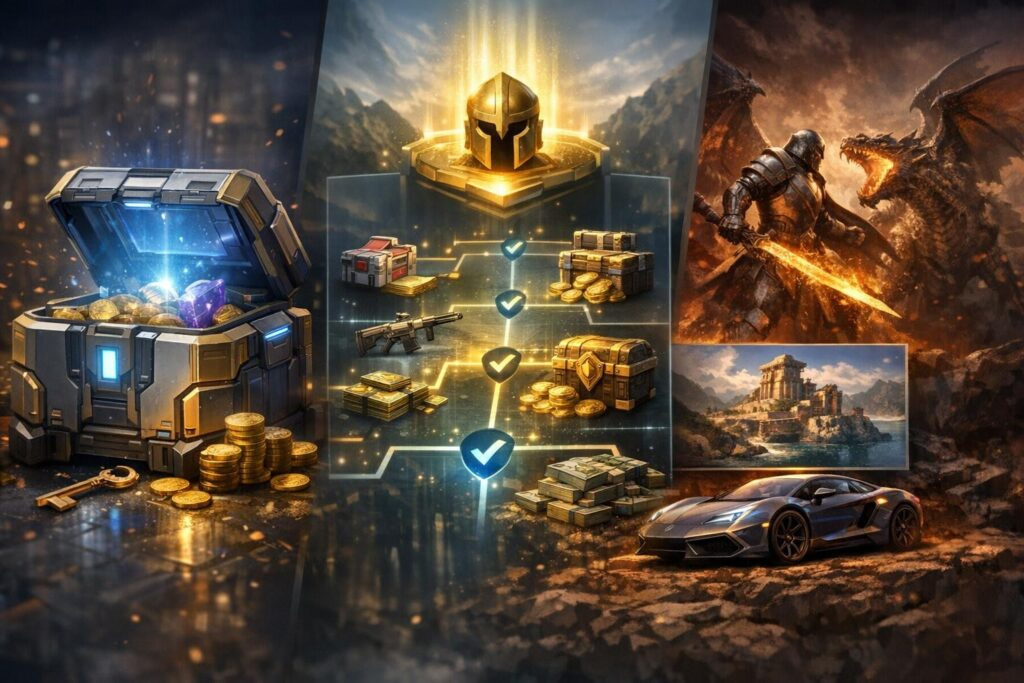

Gaming monetization has evolved dramatically over the past decade, and players now face three primary ways developers ask for their money: loot boxes, battle passes, and traditional DLC. Each system offers different value propositions, and understanding which gives you the best bang for your buck can save you serious cash while maximizing your gaming enjoyment.
As someone who’s spent countless hours grinding through seasons and opening mystery boxes, I’ve learned firsthand what actually delivers value versus what just drains your wallet. Let’s break down these monetization models so you can make smarter spending decisions in your favorite games.
Understanding Loot Boxes: The Gambling Controversy
Loot boxes represent the most controversial monetization method in modern gaming. You pay real money for a virtual container that contains randomized items—maybe a legendary skin, or maybe just some common junk you already own.
How Loot Box Systems Work
The mechanics are straightforward but psychologically manipulative. You purchase a box without knowing its contents, then experience that dopamine rush when opening it. Game developers design these systems to trigger the same reward pathways as slot machines, which explains why multiple countries have started regulating or outright banning them.
- Instant gratification with immediate rewards
- Completely randomized outcomes
- Often contains duplicate items
- No guaranteed value for your money
- Can become addictive spending pattern
The Value Problem with Random Rewards
Here’s the brutal truth: loot boxes rarely deliver good value. You might spend fifty dollars chasing one specific skin and never get it. The randomization means you’re essentially gambling, and the house always wins. Sure, mobile games and quick-session titles make loot boxes feel exciting, but that excitement comes at a premium price with no guarantees.
Regulatory bodies across Europe and Asia have increasingly classified loot boxes as gambling, forcing developers to disclose odds or remove them entirely from games.
Battle Passes: The Current Industry Standard
Battle passes have become the dominant monetization model for live-service games, and for good reason. This system offers transparent progression where you know exactly what you’re working toward.
Breaking Down Battle Pass Mechanics
Most battle passes cost between eight and twelve dollars and last for a season, typically around three months. You get a roadmap showing every reward across multiple tiers. Complete challenges, earn experience, level up, and unlock cosmetics, emotes, and sometimes in-game currency.
The beauty of this system lies in its dual-track approach. Free players can access a limited reward track, while premium pass holders unlock significantly better items. Games like Fortnite have perfected this formula, generating billions while keeping players engaged throughout each season.
Why Battle Passes Offer Superior Value
Battle passes win the value game for several compelling reasons. First, you see every reward upfront—no surprises, no randomization. Second, the cost-to-content ratio is exceptional. For roughly ten dollars, you might unlock fifty or more cosmetic items, character skins, and other rewards.
- Fixed price with transparent rewards
- Encourages consistent gameplay without predatory mechanics
- Often returns enough premium currency to buy next season
- Creates engaging progression systems
- No duplicate items or wasted purchases
The Time Investment Factor
Battle passes aren’t perfect though. They require time commitment. If you purchase a pass but don’t play enough to complete it, you’ve wasted money. This creates a psychological pressure to keep playing, which some players find stressful rather than enjoyable. Casual gamers who can’t dedicate several hours weekly might not reach higher tier rewards.
DLC: Traditional Paid Content in Modern Gaming
Downloadable content represents the old-school approach to post-launch monetization. You pay for specific content packs—new characters, story campaigns, maps, or gameplay modes.
What Makes DLC Different
DLC offers the clearest value proposition: you know exactly what you’re buying before purchase. Fighting games frequently use this model, releasing new characters for individual purchase or in season passes. Games like Tekken 8 continue this tradition, offering character packs that fighting game fans expect and accept.
When DLC Delivers Value
Quality DLC can provide excellent value, especially substantial story expansions. The Witcher 3’s Blood and Wine expansion offered dozens of hours of new content for twenty dollars—incredible value compared to buying loot boxes or even some battle passes.
However, when developers combine multiple monetization systems—selling DLC alongside battle passes and microtransactions—player wallets take a serious beating. This layered approach feels exploitative rather than fair.
Comparing Value Across All Three Systems
| Feature | Loot Boxes | Battle Passes | DLC |
|---|---|---|---|
| Cost Predictability | Low | High | High |
| Content Visibility | Hidden | Transparent | Transparent |
| Time Required | None | Significant | Varies |
| Value Rating | Poor | Excellent | Good |
| Risk Factor | High | Low | Low |
Making Smart Spending Decisions
For Regular Players
If you play a game consistently throughout its seasons, battle passes offer unbeatable value. You’ll naturally progress through tiers while playing, unlocking tons of content for a small upfront investment. Many passes even refund enough premium currency to purchase the next season, creating a self-sustaining system.
For Casual Gamers
Casual players should probably skip battle passes unless they’re certain they’ll play enough. Instead, wait for substantial DLC that adds meaningful content to games you already love. Avoid loot boxes entirely—the randomization makes them the worst value proposition for infrequent players.
For Competitive Players
Competitive gamers should prioritize content that impacts gameplay. If DLC includes new characters or maps that affect competitive balance, those purchases make sense. Battle passes work well if the grind fits your existing practice schedule. Never let cosmetic loot boxes distract from skill development.
The Industry Shift Toward Battle Passes
Major developers have recognized that battle passes generate more revenue while creating less player backlash. Overwatch 2 abandoned loot boxes entirely, transitioning to a battle pass system. Apex Legends, Call of Duty, and countless other titles have embraced seasonal passes as their primary monetization strategy.
This shift benefits players. Battle passes encourage engagement through gameplay rather than exploiting gambling psychology. They create predictable spending patterns and deliver consistent value. While not perfect, they represent a more ethical approach to live-service monetization.
Final Verdict: Which Offers Best Value
Battle passes win the value comparison for most players. They offer transparent rewards, reasonable pricing, and encourage gameplay without predatory mechanics. You know what you’re getting, and the cost-per-item ratio beats both loot boxes and most DLC.
Loot boxes should be avoided unless you genuinely enjoy the random element and can afford to gamble. They offer the worst value and risk developing unhealthy spending habits.
DLC maintains relevance for substantial content additions—new campaigns, major expansions, or essential character additions. When DLC offers meaty content rather than cosmetics, it can match or exceed battle pass value.
Ultimately, smart gaming spending means understanding your play habits, setting budgets, and choosing monetization systems that align with your gaming lifestyle. Battle passes work best for dedicated players, quality DLC serves fans seeking more content, and loot boxes? Well, they mostly serve developer bank accounts rather than player interests.
Frequently Asked Questions
Are loot boxes considered gambling?
Many regulatory bodies worldwide now classify loot boxes as a form of gambling due to their randomized nature and real-money purchases. Several countries, including Belgium and the Netherlands, have banned them outright, while others require developers to disclose drop rates.
Can I complete a battle pass without spending extra money?
Yes, most battle passes can be completed through regular gameplay without additional purchases. However, you’ll need to play consistently throughout the season and complete challenges. Some games offer level skip purchases if you’re running out of time before season end.
Is DLC worth buying if the game already has a battle pass?
It depends on what the DLC offers. If it adds substantial gameplay content like new story missions, characters, or maps, it can be worth purchasing. However, if it’s purely cosmetic and the battle pass already provides cosmetics, you might be better off skipping the DLC.
How much time does it take to complete a typical battle pass?
Most battle passes require approximately 75-100 hours of gameplay across a 10-12 week season. This averages to about 7-10 hours per week, though completing daily challenges and special events can reduce this time requirement significantly.
Which monetization system is most beginner-friendly?
DLC is most beginner-friendly because you know exactly what you’re buying before purchase. Battle passes come second but require understanding the progression system. Loot boxes are least beginner-friendly due to their randomized nature and potential to waste money without getting desired items.

Comments (0)
Sign In / Sign Up
Sign in to leave a comment.
No comments yet
Be the first one to share your thoughts!