

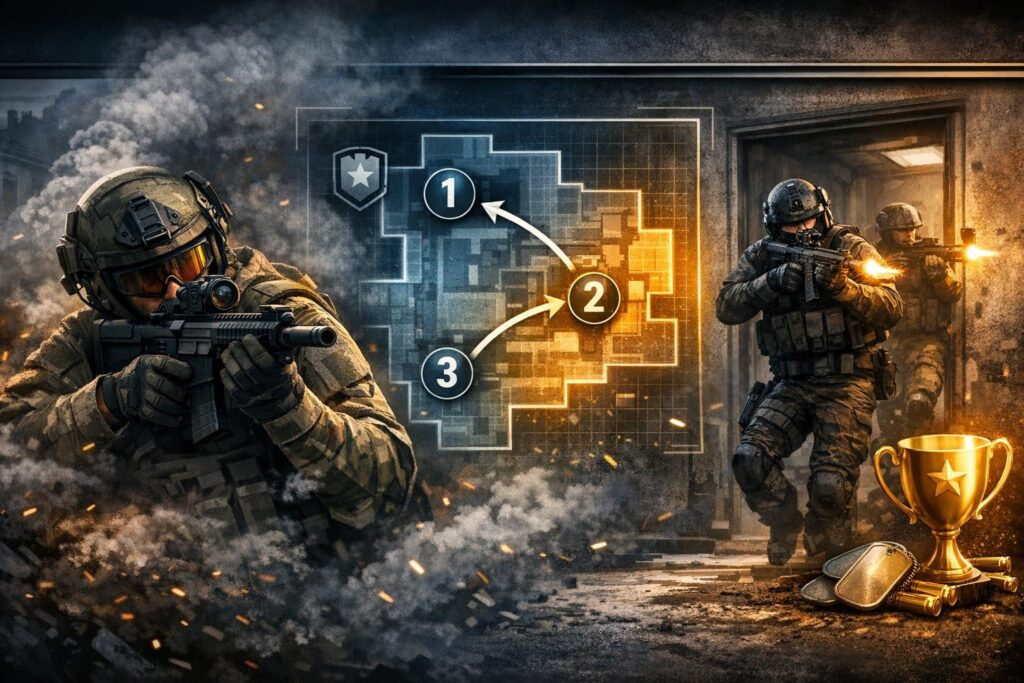

Ever watched your team fall apart in a crucial match while the enemy squad moves like a well-oiled machine? The difference isn’t always skill—it’s communication. Specifically, it’s about mastering the art of callouts, those quick verbal cues that transform chaotic gameplay into coordinated tactical execution. Let’s explore how you can become the communication MVP your team desperately needs.
Why Callouts Are Your Secret Weapon for Team Success
Picture this scenario: you spot an enemy lurking in the shadows, but your teammates are oblivious. You could spend precious seconds describing exactly where they are, what they’re doing, and what weapon they’re holding—or you could drop two words that instantly paint the complete picture. That’s the power of effective callouts in competitive gaming.
Strong communication through callouts delivers multiple advantages that directly impact your win rate:
- Instant coordination without cluttering voice channels
- Synchronized positioning and strategic execution
- Lightning-fast responses to emerging threats
- Improved team morale when everyone stays informed
Think of callouts as the language of victory. When your entire squad understands each other instantly, gameplay transforms from random encounters into beautiful tactical choreography. Professional esports teams spend countless hours refining their communication systems because they understand this fundamental truth.
The Three Golden Rules of Perfect Callouts
Master these core principles and you’ll immediately separate yourself from average players who treat voice chat like a casual conversation.
Rule Number One: Keep It Razor Sharp
Two words maximum—that’s your golden standard. During intense gameplay moments, your teammates are juggling multiple information streams simultaneously. They’re watching their screens, listening to in-game audio cues, tracking enemy movements, and processing everyone’s communications. Every extra word you add dilutes the message.
Compare these examples:
Wrong approach: “Hey guys, there’s someone up on the second floor balcony area near that wooden crate, I think they might have a sniper rifle”
Right approach: “Balcony sniper” or “Second floor, AWP”
Brevity isn’t about sacrificing important details—it’s about ruthlessly prioritizing what matters most in that exact moment. Your teammates can fill in contextual gaps faster than you can verbalize them.
Rule Number Two: Crystal Clear Precision
A clear callout means everyone on your team interprets the information identically. If you say “right side” while facing north but your teammate thinks you mean their personal right while facing south, you’re speaking different languages entirely.
Achieving clarity requires systematic approaches:
- Establish consistent directional references based on spawn points or map compass directions
- Use universally recognized landmark names rather than vague descriptors like “over there”
- Include enemy operator names or character classes when known
- Add critical status information like health levels when relevant
Your team should develop a shared vocabulary for every important location on frequently played maps. This shared language eliminates ambiguity and speeds up reaction times dramatically.
Rule Number Three: Timing Is Everything
Information has an expiration date in competitive games. Within five seconds, enemies reposition, health states change, and tactical situations evolve completely. A delayed callout isn’t just less useful—it can be actively harmful by feeding your team outdated information.
Make your callouts immediately upon gathering information. Don’t wait for the “perfect moment” or a pause in conversation. Fresh intel saves lives; stale intel gets teammates killed. Train yourself to communicate the instant you spot something important, even if it means briefly talking over less critical chatter.
Building the Perfect Callout Structure
Now that you understand the core principles, let’s examine the architecture of effective callouts that works across different games and situations.
The universal callout formula follows this pattern:
Location → Enemy Type → Additional Context
Real-world examples demonstrate this structure:
- “West stairs, Jett” – position identified, character named
- “Graveyard sniper, one-shot” – location, class, health status
- “Factory entrance, ulting” – position and ability status
- “Upper halls, three pushing” – location and enemy count with action
Notice how each callout delivers actionable intelligence without unnecessary elaboration. This represents efficient communication in its purest form.
Training Your Callout Skills: A Practical Blueprint
Like any competitive skill, mastering callouts requires deliberate practice and systematic improvement.
Phase One: Master Map Knowledge
Callouts derive directly from map knowledge. You cannot name locations you don’t recognize or describe positions you haven’t learned. Invest time studying every corner of your main maps. Identify key landmarks, common holding positions, high-ground advantages, and important cover spots. This foundational knowledge enables quick, accurate callouts under pressure.
Phase Two: Solo Practice Drills
Even playing alone, practice making callouts aloud as if communicating with teammates. This builds muscle memory and trains your brain to process and verbalize information rapidly. When you eventually join a coordinated team, these practiced responses will flow naturally without conscious effort.
Phase Three: Establish Team Standards
Collaborate with your regular squad to develop consistent callout terminology. You don’t need hundreds of specialized terms—just ensure everyone uses identical names for major locations and follows the same directional system. Create a simple reference document if needed, especially when adding new players.
Phase Four: Speed Development
Initially, formulating callouts takes conscious thought. That’s completely normal. With repetition, your callout speed increases dramatically until information flows automatically. Push yourself to communicate faster while maintaining clarity, and soon you’ll deliver instant callouts without mental delay.
Active Listening: The Other Half of Communication
Remember that perfect callouts only create value when teammates receive and process them correctly. Active listening complements your speaking skills:
- Focus intently when teammates communicate
- Acknowledge critical information verbally to confirm understanding
- React immediately to received intelligence
- Avoid interrupting teammates during important callouts
Communication functions as a two-way street. Being an excellent callout maker means nothing if you ignore incoming information from others.
The Impact of Positive Communication
Your tone carries as much weight as your words. Maintaining calm, neutral, or positive vocal delivery keeps team morale high and information clear. Panic, frustration, or blame in your voice damages team cohesion even when the actual information proves accurate.
Consider these contrasts:
Negative: “Are you all blind? Enemies pushing site!”
Positive: “Site push, three enemies”
The second version delivers identical tactical information without injecting negativity. Professional teams understand that positive communication directly correlates with performance under pressure.
Implementing Your Callout System Immediately
Callouts represent a trainable skill, not an innate talent. You’ve learned aiming mechanics, movement techniques, and ability timings—communication deserves equal practice priority. Start today by loading your favorite game and practicing location names aloud. Join matches and apply these principles even in casual games.
Within two weeks of dedicated practice, effective callouts become second nature. Your teammates will naturally follow your communication lead, creating the coordinated gameplay experience that separates winning squads from struggling ones.
The best callout is fast, clear, and timely. Everything else is secondary detail.
Transform your team’s performance by mastering this fundamental skill. Superior communication creates tactical advantages that raw mechanical skill alone cannot overcome. Start building your callout expertise now, and watch your team’s coordination reach new heights.
Frequently Asked Questions
How long does it take to develop good callout habits?
Most players notice significant improvement within two to three weeks of consistent practice. Making callouts aloud during solo play accelerates this learning curve. The key is repetition until the process becomes automatic rather than requiring conscious thought.
What if my team doesn’t use callouts consistently?
Lead by example. Start making clear, concise callouts yourself regardless of whether teammates reciprocate initially. Good communication is contagious—teammates often naturally begin following your system when they experience its benefits firsthand.
Should I make callouts after I die?
Absolutely, provided you avoid excessive chatter. Dead players often have valuable information about enemy positions and low-health targets. Keep post-death callouts brief and relevant, then stay quiet to let surviving teammates concentrate.
How do I remember all the map callout names?
Start with major landmarks and high-traffic areas rather than trying to memorize everything simultaneously. Use custom games or practice modes to walk through maps while saying location names aloud. Visual association with repeated verbal practice creates strong memory retention.
What’s more important—speed or accuracy in callouts?
Both matter, but prioritize accuracy when learning. Incorrect information actively hurts your team more than delayed information. As your skills develop, speed naturally increases while maintaining accuracy. Eventually you’ll achieve both simultaneously through practiced muscle memory.

Comments (0)
Sign In / Sign Up
Sign in to leave a comment.
No comments yet
Be the first one to share your thoughts!