

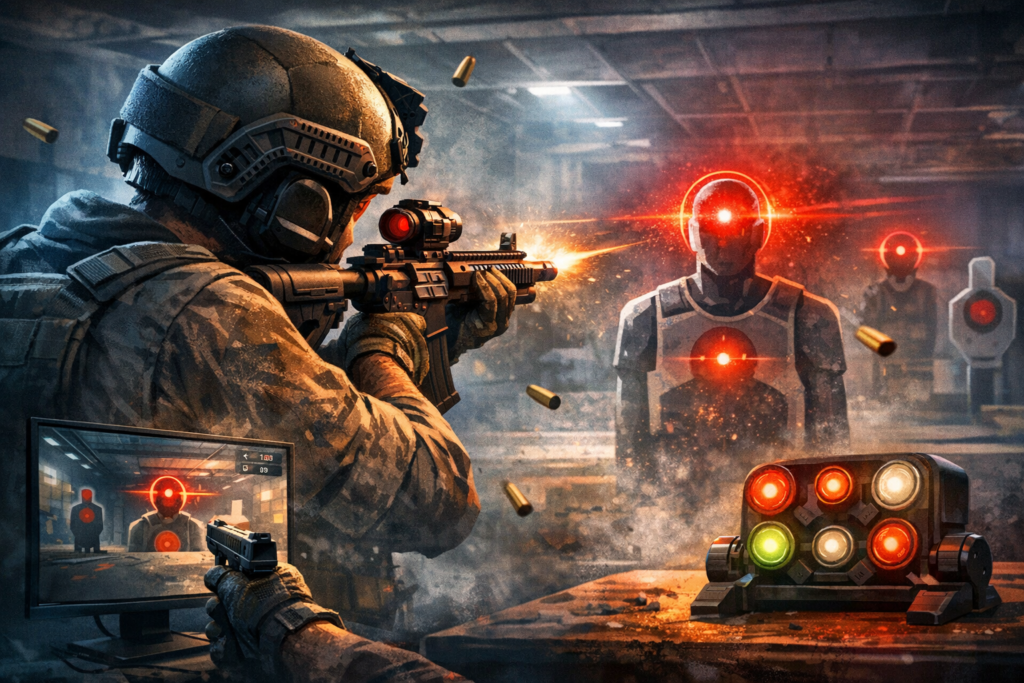

Want to transform from a random sprayer into a headshot machine? Whether you’re grinding ranked in CS2, climbing the ladder in Valorant, or dominating Overwatch lobbies, your aim is the foundation of success. The good news? You don’t need god-tier genetics or thousands of hours to see massive improvements. What you need is a structured, daily aim training routine that targets the right skills.
This comprehensive guide breaks down exactly how to improve your FPS aim through proven methods used by professional players. We’re talking practical, actionable steps you can implement today—not vague advice about “just practicing more.” By the end of this article, you’ll have a complete roadmap for building muscle memory, perfecting your tracking, and landing those crispy flicks that make your opponents rage quit.
Foundation First: Hardware and Sensitivity Setup for Better Aim
Before diving into aim training exercises, you need to nail down your hardware configuration. Think of it like building a house—you can’t expect solid results on a shaky foundation. Your mouse sensitivity, equipment quality, and environmental setup directly impact your ability to develop consistent aim.
Finding Your Perfect Sensitivity Setting
The sensitivity debate is endless, but here’s the truth: lower sensitivity generally provides better precision for tactical shooters. Start with an eDPI (effective DPI) between 200-400 for games like Counter-Strike or Valorant. Calculate this by multiplying your mouse DPI by your in-game sensitivity.
- Test your sensitivity in a bot match by tracking targets at different distances
- If you’re consistently overshooting targets, lower your sensitivity slightly
- If you’re struggling to reach targets fast enough, increase it incrementally
- Keep the same sensitivity across horizontal and vertical axes
- Disable mouse acceleration completely for predictable movement
Professional players typically maintain consistent hardware sensitivity across all games, adjusting only the in-game setting. This builds transferable muscle memory that works regardless of which FPS title you’re playing.
Essential Equipment for Optimal Performance
Your gear matters more than you think. A large mousepad gives you room for those big sweeping movements needed in clutch situations. Look for a lightweight gaming mouse between 60-80 grams—heavy mice fatigue your wrist and slow down reaction times.
Enable Raw Input in your game settings and set your polling rate to 1000Hz. These settings ensure your mouse movements translate directly to in-game actions without any smoothing or prediction algorithms interfering. For your monitor, anything above 144Hz provides a noticeable competitive advantage, especially when combined with low input lag.
“Slow is smooth, and smooth is fast. Master controlled movements before trying to speed up.”
The Daily Aim Training Routine That Actually Works
Professional esports athletes dedicate 6-8 hours daily to team practice plus additional solo drills. For the average competitive player, a focused 30-60 minute daily aim routine delivers incredible results without burning you out. The key is consistency—training every single day builds the neural pathways and muscle memory that separate good players from great ones.
Morning Warm-Up Protocol (10-15 Minutes)
Never jump straight into ranked matches with cold hands. Your warm-up primes your brain-hand coordination and gets blood flowing to your muscles. Start with static tracking exercises: place your crosshair on a specific point, move your mouse away, then snap back quickly and accurately.
Next, add disorientation training. Pick a target on the wall, spin your character around randomly, then reacquire the target as fast as possible. This builds spatial awareness and helps you recover from getting flanked in actual matches.
Game-Specific Bot Training
- CS2: Use Workshop maps like Aim Botz with headshot-only mode
- Valorant: Practice in The Range against moving bots with varied speeds
- Overwatch: Create custom games with headshot-only against AI opponents
- Rainbow Six Siege: Run Terrorist Hunt on realistic difficulty
Core Training Block (20-30 Minutes)
This is where the magic happens. Divide your training time into three focus areas: tracking, flicking, and micro-adjustments. The ideal split is 50% tracking, 30% flicking, and 20% micro-corrections. Each skill type builds different neural pathways essential for complete aim mastery.
Tracking Aim Exercises
Tracking is your ability to smoothly follow moving targets while maintaining crosshair placement. Use aim trainers like Aim Lab, Kovaak’s, or Aiming.Pro for dedicated scenarios. Focus on minimizing unnecessary mouse movements—your crosshair should glide smoothly rather than jerking around.
Practice tracking strafing targets at various speeds. Start slow and gradually increase difficulty as your consistency improves. The goal isn’t just staying on target—it’s doing so with minimal corrections, which translates to more bullets hitting in actual firefights.
Flick Aim Drills
Flicking is about explosive reaction speed when targets appear suddenly. Train using pop-up scenarios where targets spawn at random locations. Initially, prioritize accuracy over speed—speed naturally increases as your brain learns the correct movement patterns.
Challenge yourself with progressively smaller targets and tighter time windows. This overtraining makes actual in-game scenarios feel easier by comparison. Your brain develops pattern recognition that allows near-instant threat assessment and response.
Micro-Adjustment Training
Micro-adjustments are those tiny corrections that turn body shots into headshots. Practice stutter-stepping in games with movement inaccuracy penalties. This means tapping your movement keys briefly to stop momentum, firing accurately, then moving again.
Use scenarios with small moving targets that require precise corrections. This trains your fine motor control and teaches your hands exactly how much pressure to apply for different adjustment sizes.
In-Game Application (10 Minutes)
Aim trainers are fantastic, but nothing replaces practicing in your actual game environment. Spend 10 minutes in deathmatch, team deathmatch, or equivalent modes. Focus on implementing the skills you just trained rather than worrying about your kill-death ratio.
Pay attention to crosshair placement—keep it at head level and pre-aim common angles. When you round corners, arc your crosshair along the wall rather than cutting corners. This ensures you’re always ready to fire the instant an enemy appears.
Review and Analysis (5 Minutes)
Most players skip this step and wonder why they’re not improving faster. Spend five minutes reviewing your performance. Many games offer replay systems—watch your deaths and identify patterns. Are you consistently overshooting flicks? Do you lose tracking duels at specific ranges?
Keep a simple training journal noting what felt good and what needs work. This metacognitive practice accelerates learning by making you conscious of unconscious habits.
Advanced Techniques for Next-Level Aim Improvement
Once you’ve mastered the fundamentals, these advanced concepts will separate you from the competition. These techniques combine aim mechanics with game sense, creating a synergy that makes you dangerous in any situation.
Positioning Beats Raw Aim
Here’s a secret that pro players know: positioning often matters more than mechanical skill. Study your maps religiously. Learn common enemy positions and pre-place your crosshair where opponents are likely to appear. This gives you a massive advantage—you’re already aimed at them before they even see you.
If you main sniper roles, occasionally practice with closer-range weapons to improve your reaction time and target acquisition speed. This cross-training builds versatile skills that make you unpredictable and adaptable.
Counter-Strafe Movement Techniques
In games with movement inaccuracy mechanics, mastering counter-strafing is non-negotiable. When moving right, tap left to instantly stop your momentum before firing. This technique makes you accurate immediately rather than waiting for your character to decelerate naturally.
Practice this until it becomes automatic—your fingers should execute the sequence without conscious thought. Combine this with mirror-strafing your opponent’s movement to make yourself a harder target while maintaining accuracy.
Mental Game and Practice Sustainability
Your brain needs time to consolidate learning. Aim train for 20-30 minutes before jumping into competitive matches when you’re fresh and focused. Never grind aim training when fatigued—tired practice ingrains bad habits and can actually worsen your performance.
Take rest days seriously. Professional players typically train intensively five days per week with dedicated recovery periods. Your nervous system needs downtime to rebuild and strengthen those neural pathways.
Tools and Resources for Continued Growth
Join communities like Voltaic for benchmarking your progress against others and discovering new training routines. These communities offer rank systems that help you track improvement objectively. Seeing yourself climb from Bronze to Gold in tracking scenarios provides tangible motivation to keep grinding.
Consider structured courses from FPS coaching platforms if you want personalized feedback. Sometimes having an experienced player review your gameplay reveals blind spots you’d never notice yourself.
Tracking Your Progress and Staying Motivated
Results don’t appear overnight, but they do appear. Most players notice significant improvements within two weeks of consistent daily training. Your kill-death ratio will climb, your confidence in gunfights will skyrocket, and you’ll start winning duels you previously lost.
Set concrete, measurable goals. Instead of “get better aim,” aim for specific benchmarks like “achieve 80% accuracy on medium tracking scenarios” or “reduce average flick time by 50 milliseconds.” These objective measures let you celebrate wins along the journey.
| Training Duration | Expected Improvements |
|---|---|
| Week 1 | Muscle memory foundation, improved warm-up performance |
| Week 2 | Noticeable consistency gains, better tracking smoothness |
| Week 4 | Significantly faster flicks, improved competitive K/D ratio |
| Week 8 | Advanced techniques become automatic, rank climbing |
Remember that consistency trumps talent every single time. Someone with average natural ability who trains daily will eventually surpass a naturally gifted player who practices sporadically. Make your aim routine as non-negotiable as brushing your teeth.
Building the Champion Mindset
Technical skill only takes you so far. The best players combine mechanical excellence with mental resilience. When you’re in that crucial 1v3 clutch situation, your practice kicks in automatically because you’ve trained under pressure.
Embrace failure as feedback. Every death is a learning opportunity. Did you over-peek? Was your crosshair placement lazy? Did you panic and spray instead of staying calm? Answer these questions honestly and your improvement curve will steepen dramatically.
Visualize success during your training. See yourself landing those perfect headshots, winning those important rounds, climbing to your target rank. Sports psychology research consistently shows that mental rehearsal enhances physical performance.
The Road Ahead
You now have everything you need to transform your FPS aim from mediocre to elite. The routine outlined above isn’t theoretical—it’s battle-tested by professional players across multiple titles. Your job is simple: show up every day, put in the focused work, and trust the process.
Start tomorrow morning with that 10-minute warm-up. Load into your favorite aim trainer and begin building those neural pathways. Join your ranked queue with confidence knowing you’ve prepared properly. Track your stats and watch them improve week after week.
The difference between where you are now and where you want to be is simply consistent action. Every professional player started exactly where you are right now—the only difference is they committed to daily improvement. Will you do the same?
How long should I practice aim training each day?
For optimal results without burnout, dedicate 30-60 minutes daily to structured aim training. This breaks down to 10-15 minutes warming up, 20-30 minutes on core drills using aim trainers, 10 minutes applying skills in actual games, and 5 minutes reviewing your performance. Quality focused practice beats mindless grinding every time.
What is the best sensitivity for improving aim in FPS games?
The ideal sensitivity varies by individual, but most professional players use an eDPI between 200-400 for tactical shooters. Calculate your eDPI by multiplying your mouse DPI by in-game sensitivity. Start within this range and adjust based on whether you’re overshooting or undershooting targets. Lower sensitivity generally provides better precision for headshots.
Which aim trainer is best for FPS improvement?
Popular options include Aim Lab (free), Kovaak’s FPS Aim Trainer, and Aiming.Pro. All three offer excellent scenarios for tracking, flicking, and micro-adjustments. Aim Lab works great for beginners due to its free access and comprehensive tutorial system. Kovaak’s offers more advanced scenarios favored by competitive players. Choose based on your budget and experience level.
How quickly will I see improvements in my aim?
Most players notice measurable improvements within 2-3 weeks of consistent daily training. You’ll first see gains in aim trainer scores and bot match performance, followed by improved ranked statistics. Significant competitive improvement typically appears after 4-6 weeks. Remember that consistency matters more than intensity—training 30 minutes daily beats sporadic 3-hour sessions.
Should I use the same sensitivity across all FPS games?
Maintaining consistent mouse hardware DPI across games helps build transferable muscle memory. Keep your mouse DPI constant (typically 400-800) and only adjust in-game sensitivity to match your preferred feel. Some players use sensitivity converters to ensure identical 360-degree turn distances across titles, maximizing muscle memory transfer between games.
What hardware upgrades improve aim the most?
Priority upgrades ranked by impact: First, get a large mousepad for unrestricted movement. Second, upgrade to a 144Hz or higher refresh rate monitor for smoother visuals. Third, invest in a lightweight gaming mouse (60-80 grams) with a quality sensor. These three upgrades provide the biggest performance boost without requiring thousands of dollars.
Is tracking or flicking more important for FPS games?
Both skills are essential but their importance varies by game type. Tracking matters more in hero shooters like Overwatch and Apex Legends where sustained damage is crucial. Flicking dominates in tactical shooters like CS2 and Valorant where one-tap headshots win duels. Train both skills but emphasize the type most relevant to your main game.
Can I overtrain my aim?
Yes, overtraining leads to diminishing returns and can ingrain bad habits. Stop training when you notice consistent performance drops or fatigue. Your brain consolidates learning during rest, not during practice. Professional players typically train 5 days per week with 2 rest days. If your aim feels worse after extended sessions, you’re overtraining and need recovery time.

Comments (0)
Sign In / Sign Up
Sign in to leave a comment.
No comments yet
Be the first one to share your thoughts!