

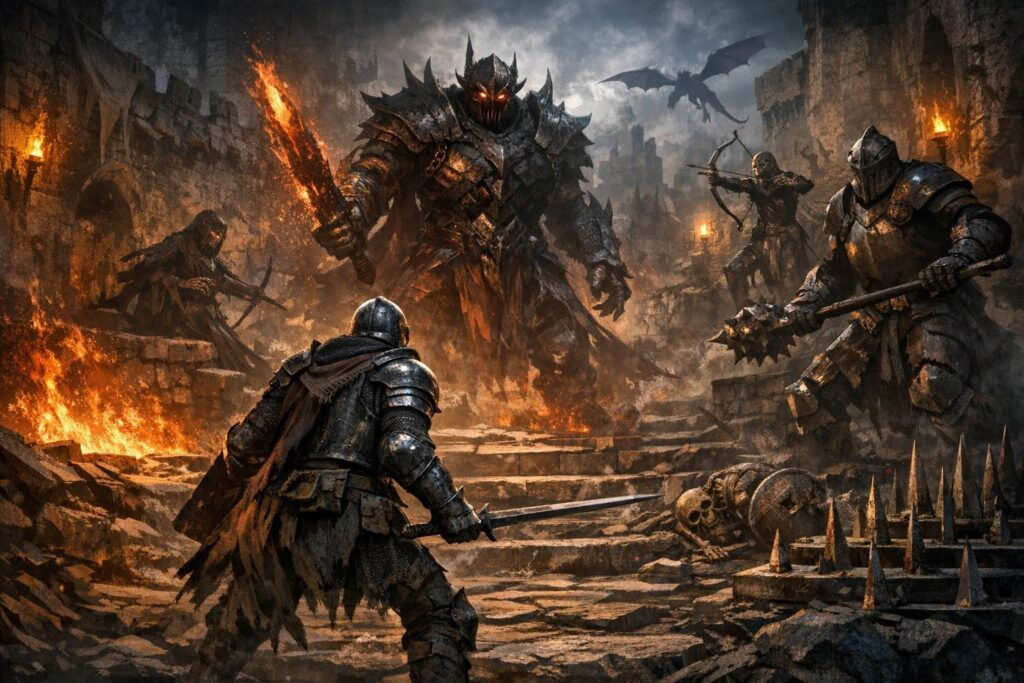

Game difficulty has always been a hot topic in the gaming community. Whether you’re a casual player enjoying a relaxing puzzle game or a hardcore gamer seeking the ultimate challenge, understanding how difficulty works can transform your gaming experience. The reality is that difficulty in video games isn’t just about throwing more enemies at you or cutting your health in half—it’s a sophisticated system designed to keep you engaged, motivated, and coming back for more.
What Really Happens Behind the Scenes of Game Difficulty
When developers create difficulty systems, they’re essentially building an invisible dance partner that responds to your every move. This concept, known as dynamic difficulty adjustment or DDA, monitors your performance in real-time and makes subtle changes to keep you in what psychologists call the “flow state”—that magical zone where you’re completely absorbed in the game without feeling frustrated or bored.
Think of it this way: when you’re playing a platformer and keep dying at the same jump, the game might secretly make that platform slightly wider or give you a fraction of a second more reaction time. You won’t consciously notice these changes, but your brain registers the progress, giving you that satisfying feeling of improvement.
The Psychology Behind Challenge and Reward
Our brains are wired to seek mastery. This fundamental drive, called mastery motivation, pushes us to overcome obstacles and improve our skills. Video games tap into this perfectly by providing controlled challenges that feel achievable yet demanding. When you finally beat that boss after twenty attempts, the dopamine rush isn’t just about winning—it’s about the effort you invested.
However, here’s where things get interesting: if a game helps you too much, your victory feels hollow. This psychological phenomenon, known as the effort justification effect, means that we value rewards more when we’ve worked harder for them. That’s exactly why many players feel cheated when they discover a game has been secretly helping them along.
Why Hard Mode Feels Unfair and Frustrating
The infamous “hard mode” in many games gets a bad reputation, and there’s a legitimate reason for this. Poor difficulty implementation often breaks the delicate balance between challenge and skill. When developers simply multiply enemy health by three and call it “hard mode,” they’re not creating meaningful difficulty—they’re creating artificial frustration.
The Challenge-Skill Balance Problem
Every player has a personal sweet spot where the game feels challenging but fair. Push too far beyond their skill level, and frustration sets in. Make it too easy, and boredom takes over. The perception of difficulty is incredibly subjective and influenced by multiple factors:
- Previous gaming experience and genre familiarity
- Current mood and stress levels
- Hardware performance and input lag
- Time pressure and external distractions
- Personal expectations based on marketing or reviews
What feels like a refreshing challenge to an experienced player might seem like an impossible wall to someone new to the genre. This is why one-size-fits-all difficulty settings often miss the mark.
When Games Cheat and Players Notice
Players are surprisingly good at detecting when a game manipulates difficulty behind the scenes. Classic examples include racing games where rubber-banding AI keeps opponents unnaturally close regardless of your performance, or shooters where enemies become bullet sponges without any tactical changes. These implementations feel cheap because they violate player expectations of consistent game rules.
The best difficulty systems are invisible—they challenge you without feeling manipulative, and help you without making victories feel unearned.
How Modern Games Implement Smart Difficulty Systems
Today’s game designers have evolved far beyond simple difficulty sliders. They employ sophisticated techniques to create experiences that adapt to individual players while maintaining the integrity of the challenge.
Adaptive Systems That Actually Work
Successful adaptive difficulty systems make changes that enhance the experience without feeling like cheating. For example, some action games subtly adjust enemy accuracy based on your health—not enough to make enemies feel stupid, but just enough to give you breathing room when you’re on your last sliver of health. This creates dramatic moments where you barely survive, which feels more satisfying than simply dying repeatedly.
Other games take a different approach by adjusting resource availability. Running low on ammunition consistently? The game might spawn slightly more ammo pickups. Breezing through encounters? Resources become scarcer, forcing you to be more strategic with your shots.
The Difficulty Curve Concept
A well-designed difficulty curve is like a rollercoaster—it has peaks and valleys strategically placed to maintain engagement. The typical curve looks something like this:
| Game Phase | Difficulty Level | Player Experience |
|---|---|---|
| Early Game | Moderate to High | Learning mechanics, feeling overwhelmed |
| Mid Game | Low to Moderate | Mastering systems, feeling powerful |
| Boss Encounters | High Spikes | Testing mastery, intense focus |
| End Game | Very High | Ultimate challenge, applying all skills |
This curve allows players to experience growth. The initial challenge establishes that the game won’t hold your hand, the middle section lets you feel competent as you master mechanics, and the late-game challenges test everything you’ve learned.
Why We Love Challenging Games Despite the Frustration
There’s a reason why notoriously difficult games have passionate fanbases. The human brain releases dopamine not just when we succeed, but during the pursuit of challenging goals. This neurological reward system makes difficult games potentially more engaging than easy ones—when implemented correctly.
The Appeal of Overcoming Obstacles
Difficult games create memorable moments precisely because they’re difficult. You’ll remember that boss fight where you finally succeeded after countless attempts far more vividly than the tutorial level you breezed through. These struggles create emotional investment and personal narratives that make gaming experiences meaningful.
Additionally, challenging games foster community. Players bond over shared struggles, exchange strategies, and celebrate victories together. The entire “souls-like” genre has built a massive community around this principle—the shared experience of difficult but fair challenges creates strong social connections.
When Difficulty Crosses the Line
Not all difficulty is created equal. There’s a crucial difference between challenging and punishing. Challenges test your skills and knowledge within fair parameters. Punishment often involves:
- Losing significant progress due to unexpected deaths
- Unclear mechanics that require trial-and-error guessing
- Inconsistent rules that change without warning
- Cheap deaths from off-screen enemies or unavoidable hazards
- Forcing players to repeat lengthy sections before retry attempts
The fear of losing progress is one of the biggest sources of gaming frustration. Modern game design increasingly recognizes this by implementing generous checkpoint systems and quick retry options that maintain challenge while respecting player time.
Finding Your Perfect Difficulty Sweet Spot
Understanding how difficulty works empowers you to make better choices about your gaming experiences. Don’t feel pressured to always play on the hardest setting—that’s not how most games are designed to be enjoyed on a first playthrough.
Practical Tips for Choosing Difficulty
Consider your current situation when selecting difficulty. If you’re stressed after work and want to relax, there’s absolutely nothing wrong with choosing an easier setting. Gaming should be enjoyable, not another source of stress. On the other hand, if you’re in the mood for intense focus and have time to spare, challenging yourself with harder modes can be incredibly rewarding.
Many modern games allow you to change difficulty mid-playthrough. Take advantage of this flexibility. Started too hard? Dial it back. Finding it too easy? Bump it up. The goal is engagement, not proving something to anyone.
Recognizing Fair vs Unfair Difficulty
As you gain experience with different games, you’ll develop a sense for what constitutes fair challenge. Fair difficulty gives you the tools and information needed to succeed—it’s up to you to execute properly. Unfair difficulty withholds critical information, changes rules arbitrarily, or relies on random chance rather than skill.
When a game feels unfair, ask yourself: Am I missing something, or is the game poorly designed? Sometimes the answer is the former, requiring you to adjust your approach. Other times, it’s genuinely the latter, and there’s no shame in moving on to a better-designed experience.
The Future of Adaptive Difficulty Systems
As gaming technology advances, difficulty systems are becoming increasingly sophisticated. Machine learning algorithms can now analyze player behavior patterns and make predictions about optimal challenge levels with impressive accuracy. Future games may offer personalized difficulty that evolves uniquely for each player, creating bespoke experiences that feel perfectly tuned to individual skill levels.
However, transparency remains a concern. Players generally prefer to know when and how games are adapting to them. The most successful implementations will likely balance invisible adjustments with clear player agency, allowing gamers to feel both supported and in control of their experience.
Understanding game difficulty transforms how you approach gaming. Rather than seeing hard modes as mountains to conquer or easy modes as admissions of failure, recognize them as tools for crafting your ideal experience. The best difficulty is the one that keeps you engaged, learning, and most importantly, having fun. After all, that’s what gaming is really about—not artificial challenges or bragging rights, but the joy of interactive entertainment tailored to you.
Frequently Asked Questions
Does playing on easy mode mean I’m a bad gamer?
Absolutely not. Difficulty settings exist precisely because people have different skill levels, time availability, and reasons for playing. Some players want relaxation, others want challenge. Neither approach is superior—it’s about what you enjoy. Professional game designers typically balance games around normal mode, making it the intended experience for most players.
How can I tell if a game is cheating with difficulty?
Watch for patterns like enemies suddenly becoming more accurate when you’re low on health, opponents catching up impossibly fast in racing games despite your perfect performance, or resources appearing exactly when you need them. If the game’s behavior seems to contradict its established rules based on your performance rather than game state, it’s likely using dynamic difficulty adjustment.
Why do some games feel harder than they actually are?
Perceived difficulty often stems from unclear communication rather than actual challenge. Games that don’t properly explain mechanics, use inconsistent visual language, or have poor feedback systems feel harder because players struggle to understand what’s expected. Additionally, your emotional state, fatigue level, and external stress significantly impact how difficult a game feels at any given moment.
Should I always start games on the default difficulty?
Default difficulty is usually the developer’s recommended experience and typically offers the best balance of challenge and accessibility. However, if you’re experienced in a particular genre or know you prefer more relaxed gameplay, there’s no rule against adjusting from the start. Many games also provide helpful descriptions of what each difficulty level emphasizes, helping you make informed choices.
What makes a challenging game fun instead of frustrating?
Fun challenging games provide clear feedback about why you failed, offer consistent rules you can learn and master, respect your time with reasonable checkpoint placement, and gradually increase complexity as you improve. Frustrating games tend to feature cheap deaths, unclear objectives, excessive repetition of content, and challenges that feel random rather than skill-based. The key difference is whether failure feels like a learning opportunity or a waste of time.

Comments (0)
Sign In / Sign Up
Sign in to leave a comment.
No comments yet
Be the first one to share your thoughts!