

 fatheryarik
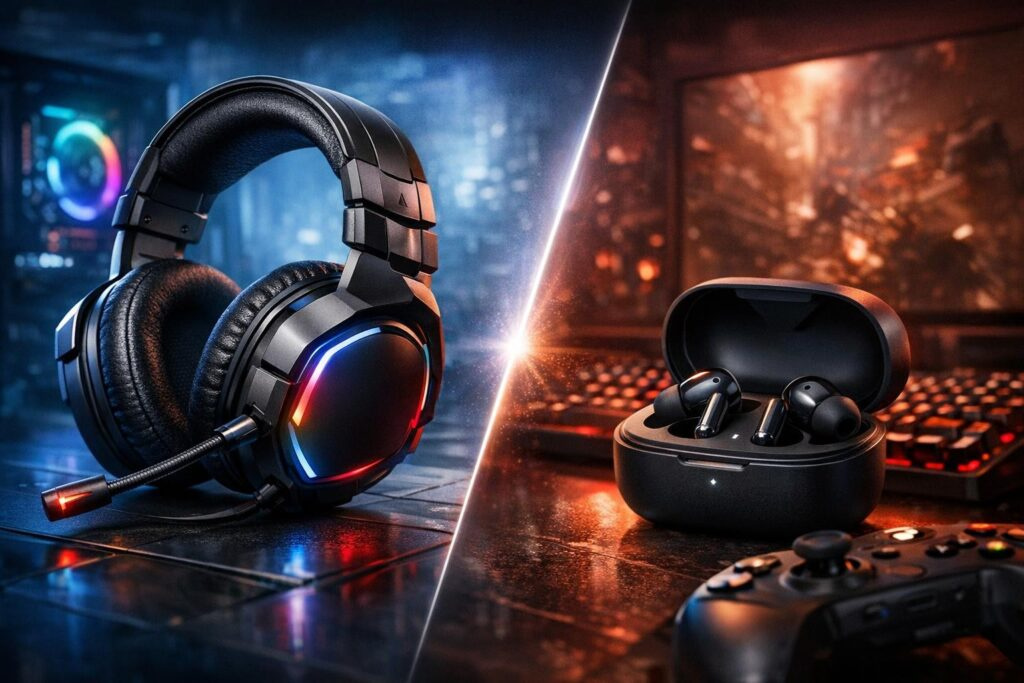
Choosing between gaming headsets and earbuds can feel like picking your main character before a ranked match. Both options promise great audio, but they deliver completely different experiences. If you’re wondering which setup will give you that competitive edge or enhance your casual gaming sessions, you’re in the right place. Let’s break down the gaming headset versus earbuds debate so you can make an informed choice that fits your playstyle and lifestyle.
Sound Quality: Which One Delivers That Epic Audio Experience?
When it comes to sound quality for gaming, headsets traditionally take the crown. The larger drivers found in gaming headsets, often ranging from 40mm to 50mm, create a fuller soundscape that makes every explosion, footstep, and dialogue line crystal clear. You get deep bass that rumbles through your ears during intense combat sequences, crisp highs that help you pinpoint enemy locations, and balanced mids for voice communication.
Gaming headsets also frequently include virtual surround sound technologies like Dolby Atmos or DTS Headphone:X. These features create a 360-degree audio environment that’s absolutely crucial for competitive first-person shooters. When you can accurately determine if an enemy is flanking from the left or approaching from behind, you gain a serious tactical advantage.
Gaming earbuds have made impressive strides in recent years. Modern wireless gaming earbuds with dedicated low-latency connections can deliver surprisingly good audio quality. However, physics is physics—smaller drivers typically mean less bass impact and slightly reduced overall soundstage. That said, earbuds excel at passive noise isolation thanks to their in-ear design with silicone or foam tips, which can actually block out external noise better than some open-back headsets.
Which Sound Profile Suits Your Gaming Genre?
- Competitive FPS games: Gaming headsets with surround sound win here
- Story-driven RPGs: Headsets provide more immersive soundtracks
- Mobile gaming: Earbuds are perfectly adequate and more practical
- Quick casual sessions: Earbuds get you in the game faster
Microphone Performance: Communication is Key
If you play team-based games or stream your gameplay, microphone quality becomes critically important. Gaming headsets absolutely dominate this category. Most gaming headsets feature boom microphones that position close to your mouth, capturing your voice with clarity while minimizing background noise. Many include environmental noise cancellation technology that filters out keyboard clicks, fan noise, and other distractions.
The boom mic design also allows for better voice pickup patterns and frequency response. Your teammates will hear you clearly during crucial callouts, and if you’re streaming, your audience won’t struggle to understand your commentary.
Gaming earbuds typically rely on built-in microphones positioned along the cable or in the earbud housing. While manufacturers have improved these significantly, they still can’t match the performance of a dedicated boom mic. Your voice may sound thinner, and background noise tends to bleed through more easily. Some premium gaming earbuds include dual microphones with noise cancellation, which helps, but they’re still a compromise.
For content creators, earbuds offer one interesting advantage: they keep your face visible on camera, which is why some streamers use earbuds paired with a separate desktop microphone.
Comfort and Wearability During Extended Gaming Sessions
Comfort is highly personal, but there are general trends worth noting. Gaming headsets distribute their weight across your head using padded headbands and ear cushions. Quality headsets with memory foam padding can be worn for hours without discomfort. The weight distribution means less pressure on any single point.
However, headsets do trap heat around your ears. During intense gaming sessions or in warm environments, this can become uncomfortable. Some people also experience headband pressure fatigue after several hours of continuous wear.
Gaming earbuds are incredibly lightweight and don’t create the same heat buildup. They’re almost invisible once inserted, which feels liberating if you’re not used to headsets. The catch? Ear canal comfort varies dramatically between individuals. What fits perfectly for one person might fall out constantly or cause pressure pain for another. Finding the right ear tip size is essential.
Fit Considerations
- Headsets work for virtually everyone regardless of ear shape
- Earbuds require proper sizing and may not suit all ear types
- Glasses wearers sometimes experience discomfort with headset clamping force
- Earbuds eliminate the glasses interference issue entirely
Battery Life and Connectivity: Wireless Freedom or Wired Reliability?
Wireless gaming headsets typically offer impressive battery life, often ranging from 20 to 40 hours on a single charge. The larger physical size allows for bigger batteries without adding excessive weight. This means you can game for days without worrying about recharging.
Gaming earbuds have smaller batteries, usually providing 6 to 10 hours of continuous use. However, their charging cases extend total battery life to 30 hours or more. You’ll need to return them to the case between gaming sessions, but this rarely becomes a practical limitation for most users.
Latency Matters for Competitive Gaming
Audio latency is the delay between action on screen and sound reaching your ears. For competitive gaming, this delay needs to be minimal. Wireless gaming headsets and earbuds using dedicated 2.4GHz wireless connections typically achieve latency between 1 to 5 milliseconds, which is imperceptible during gameplay.
Standard Bluetooth connections, which many earbuds use for phone compatibility, introduce 20 to 40 milliseconds of latency. This delay is noticeable in fast-paced games and puts you at a competitive disadvantage. Always check if gaming earbuds support low-latency wireless modes specifically for gaming.
Wired connections, whether headset or earbuds, eliminate latency concerns entirely. They also never need charging. The tradeoff is dealing with cables that can tangle or limit your movement.
Portability and Use Cases: Home Setup Versus On-the-Go Gaming
Gaming earbuds absolutely crush headsets in portability. They fit in your pocket with their charging case, making them perfect for gaming on handheld devices, commuting, or traveling. If you game on a Nintendo Switch, Steam Deck, or mobile phone, earbuds are the obvious choice.
Gaming headsets are bulkier and designed primarily for stationary gaming at your PC or console. While some fold for storage, they still require dedicated space in a bag. They’re best suited for your home gaming setup where portability isn’t a priority.
| Feature | Gaming Headset | Gaming Earbuds |
|---|---|---|
| Sound Quality | Excellent – larger drivers, fuller sound | Good – improving but limited by size |
| Microphone | Superior – boom mic with noise cancellation | Adequate – built-in, less clarity |
| Comfort (Long Sessions) | Good – distributed weight, potential heat | Variable – depends on ear fit |
| Battery Life | 20-40 hours continuous | 6-10 hours plus case |
| Portability | Low – bulky design | Excellent – pocket-sized |
| Latency (2.4GHz) | 1-5ms | 1-5ms |
| Price Range | Budget to premium options | Generally more affordable entry |
Price Considerations: Getting the Best Value
Budget gaming headsets start around forty to fifty dollars for wired options with decent sound quality. Mid-range wireless headsets typically cost between eighty and one hundred fifty dollars, offering good audio, comfortable designs, and reliable connectivity. Premium gaming headsets with advanced features can exceed three hundred dollars.
Gaming earbuds often have lower entry prices, with basic wired options starting around twenty dollars. However, true wireless gaming earbuds with low-latency connections and good sound quality typically cost sixty to one hundred fifty dollars. Premium models competing with high-end headsets can reach similar price points.
Making Your Choice: Headset or Earbuds?
Choose gaming headsets if you primarily game at home on PC or console, value immersive surround sound, need excellent microphone quality for team communication or streaming, and want long battery life without frequent charging. Headsets deliver the most complete gaming audio experience for stationary setups.
Choose gaming earbuds if you game on portable devices, need something compact for travel, prefer lightweight options that don’t trap heat, already use a separate microphone for streaming, or want versatility for both gaming and everyday listening.
The Best of Both Worlds Strategy
Many gamers eventually acquire both. Use a gaming headset as your primary setup for serious gaming sessions at home, and keep wireless earbuds available for portable gaming, casual sessions, or when you want something lighter. This combination covers every gaming scenario without compromise.
Test different options if possible before committing to expensive purchases. Comfort is subjective, and what works perfectly for one person might not suit another. Read reviews from gamers with similar preferences and gaming habits to yours.
Technical Features to Look For
For Gaming Headsets
- Driver size of at least 40mm for better sound quality
- Virtual surround sound support for competitive advantage
- Detachable or flip-up boom microphone
- Memory foam ear cushions for extended comfort
- 2.4GHz wireless for low latency if going wireless
- Battery life exceeding 20 hours
For Gaming Earbuds
- Dedicated gaming mode with low-latency connection
- Multiple ear tip sizes for proper fit
- IPX4 or higher water resistance rating
- Charging case with additional battery capacity
- Dual microphones with environmental noise cancellation
- Quick charge capability for urgent gaming sessions
Final Thoughts on the Gaming Audio Debate
The gaming headset versus earbuds question doesn’t have a universally correct answer. Your ideal choice depends on where you game, what you play, how you communicate, and what matters most to you personally. Gaming headsets offer the most immersive audio experience with superior microphones, making them perfect for dedicated home gaming setups. Gaming earbuds provide unmatched portability and convenience, ideal for gamers who value mobility and versatility.
Consider your primary gaming environment first. If you spend most gaming time at a desk or couch with your main console or PC, a quality gaming headset delivers better overall value. If you frequently game on handheld devices, during travel, or prefer lighter options, gaming earbuds make more practical sense.
Remember that audio gear is highly personal. Comfort, fit, and sound preferences vary significantly between individuals. Whenever possible, try before buying or purchase from retailers with good return policies. Your perfect gaming audio solution should enhance your experience without creating new frustrations.
Are gaming headsets better than earbuds for competitive gaming?
Gaming headsets generally provide an advantage for competitive gaming due to their larger drivers, superior surround sound capabilities, and better microphone quality. The improved spatial audio helps you locate enemies more accurately in first-person shooters and battle royale games. However, quality gaming earbuds with low-latency wireless connections can also perform well in competitive scenarios, especially if you pair them with a separate microphone.
Can I use regular earbuds for gaming instead of gaming-specific ones?
You can use regular earbuds for gaming, but you may experience audio latency issues that create a noticeable delay between on-screen action and sound. Standard Bluetooth earbuds typically have 20-40 milliseconds of latency, which negatively impacts gameplay in fast-paced titles. Gaming-specific earbuds include low-latency modes or dedicated wireless connections that reduce this delay to imperceptible levels, providing a much better gaming experience.
How important is surround sound for gaming?
Surround sound becomes increasingly important in competitive multiplayer games where directional audio provides tactical information. In games like Valorant, Call of Duty, or Apex Legends, accurately determining enemy positions through audio cues gives you a significant advantage. For single-player story games or casual gaming, surround sound enhances immersion but isn’t critical to gameplay. Standard stereo audio from quality earbuds or headsets works perfectly fine for most gaming situations.
Do gaming headsets cause more hearing damage than earbuds?
Neither gaming headsets nor earbuds inherently cause more hearing damage—volume level and duration of use matter most. Earbuds sit closer to your eardrums, which theoretically could cause damage at lower volumes, but both can be safe when used responsibly. Always keep volume at reasonable levels where you can still hear your surroundings, take regular breaks during long gaming sessions, and follow the 60-60 rule: no more than 60 percent volume for no more than 60 minutes at a time.
Which lasts longer, gaming headsets or earbuds?
Gaming headsets typically have longer lifespans than earbuds due to their more robust construction and fewer fragile components. Headsets usually feature replaceable cables, removable ear cushions, and sturdier designs that withstand daily use better. Earbuds have smaller, more delicate components and batteries that degrade faster with frequent charging cycles. With proper care, quality gaming headsets can last five years or more, while gaming earbuds typically need replacement after two to three years of regular use.
Comments (0)
Sign In / Sign Up
Sign in with your Google account to leave a comment. It's fast, easy, and secure.
No comments yet
Be the first one to share your thoughts!