

 fatheryarik
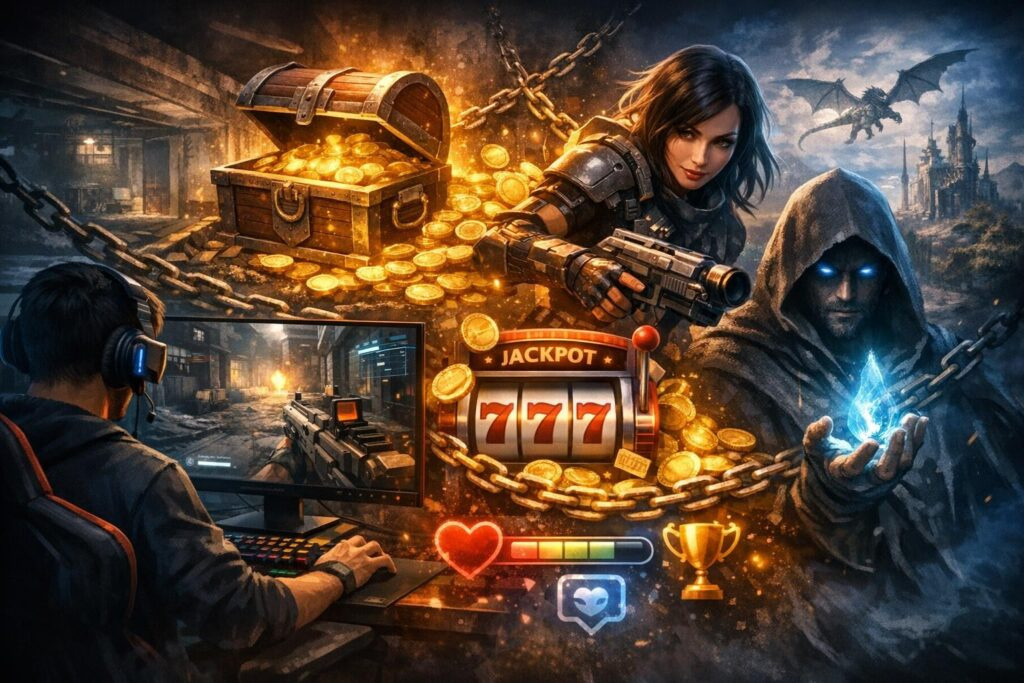
Ever found yourself completely glued to your controller at 3 AM, telling yourself “just one more level” for the fifth time? You’re not weak-willed or lacking discipline. What you’re experiencing is the result of carefully crafted psychological mechanics that game designers deliberately build into their products. Let’s pull back the curtain on this captivating machine and understand exactly how these addictive game mechanics work to keep us playing.
The Brain Chemistry Behind Gaming Addiction
At the heart of every engaging game experience lies a simple chemical messenger called dopamine. This neurotransmitter floods your brain every single time you complete a quest, unlock an achievement, or level up your character. It’s the same substance that makes chocolate taste amazing and exercise feel rewarding. Dopamine creates that satisfying rush that makes you want to keep going, pushing forward to experience that feeling again.
But here’s the catch: this isn’t just about pleasure. Your brain is essentially being trained through operant conditioning, the same psychological principle that makes slot machines so dangerous. Each time you perform an action and receive a reward, your neural pathways strengthen that connection. Your brain starts anticipating the reward, creating a powerful loop that becomes increasingly difficult to break.
Variable Reward Systems: The Secret Weapon of Game Design
The most powerful tool in a game designer’s arsenal is the variable reward system. Think about opening loot boxes in your favorite RPG or grinding for rare drops in multiplayer games. Sometimes you get common junk, other times you score that legendary weapon you’ve been hunting for weeks. The unpredictability is precisely what makes it so compelling.
Why Uncertainty Keeps You Hooked
Our brains are hardwired to respond more intensely to uncertainty than to guaranteed outcomes. That possibility of scoring something amazing creates a psychological tension that keeps you engaged far longer than predictable rewards ever could. This is why players spend countless hours farming the same boss or opening endless loot crates, hoping for that big payoff.
- Random loot drops create anticipation and excitement
- Unpredictable rewards trigger stronger dopamine responses
- The “maybe this time” mentality overrides rational decision-making
- Variable reinforcement schedules create persistent behavior patterns
Gameplay Loops That Create Compulsive Behavior
Successful games master the art of the gameplay loop, a repeating cycle that keeps players engaged for extended sessions. The basic structure looks something like this: face a challenge, overcome it, receive a reward, use that reward to become stronger, then face a bigger challenge. This core loop taps into our fundamental desire for progress and improvement.
Every iteration through this cycle delivers that satisfying sense of advancement. You’re constantly seeing tangible evidence of your growth, whether it’s new abilities, better equipment, or higher stats. The human brain absolutely craves this feeling of forward momentum, and games deliver it in concentrated doses.
The Psychology of Progress Mechanics
Progress bars, experience points, skill trees, and leveling systems all serve the same purpose: making your advancement visible and measurable. Even small increments of progress trigger reward responses in your brain. That’s why you find yourself thinking “just one more quest” or “I’m so close to the next level” when you know you should stop playing.
Achievement Systems and Progression Tracking
Achievements represent the predictable side of game rewards. Unlike random loot drops, you know exactly what you’ll get for completing specific tasks. This creates clear goals and provides structure to your gaming experience. However, if games relied solely on predictable rewards, they’d quickly become boring.
The magic happens when developers combine predictable achievement systems with unpredictable elements. You might know you’ll earn a badge for defeating 100 enemies, but you don’t know what loot each enemy will drop along the way. This combination creates the perfect psychological balance to maintain engagement.
The most addictive games balance certainty and uncertainty, giving players both the security of known goals and the excitement of unexpected discoveries.
Streak Mechanics and Fear of Missing Out
Modern game design frequently employs daily login rewards and win streak mechanics. The longer you maintain your streak, the better the rewards become. Miss a single day, and everything resets to zero. This taps into a powerful psychological principle called loss aversion.
Why Losing Hurts More Than Winning Feels Good
Research consistently shows that humans feel the pain of loss approximately twice as intensely as the pleasure of equivalent gains. A 30-day login streak represents invested time and effort. Breaking that streak feels like throwing away something valuable you’ve built. This emotional response drives players to log in even when they don’t particularly feel like playing, just to preserve their progress.
| Mechanic Type | Psychological Trigger | Player Response |
|---|---|---|
| Daily Login Rewards | Fear of Missing Out | Consistent engagement |
| Win Streaks | Loss Aversion | Maintaining momentum |
| Limited-Time Events | Scarcity Mindset | Urgent participation |
| Season Passes | Sunk Cost Fallacy | Completing objectives |
Social Connection and Competitive Elements
Multiplayer modes and ranking systems add an entirely different dimension to gaming engagement. When you’re competing against real people rather than AI, the experience transforms from interacting with code into genuine social interaction. You’re building reputation, seeking validation, and becoming part of a community.
Competition amplifies the effect of achievement systems because your ranking becomes visible, measurable progress that others can observe and evaluate. This social dimension adds meaning beyond personal satisfaction. You’re not just improving your character anymore; you’re proving your worth within a community of peers.
Guilds, Clans, and Social Obligations
Joining a guild or clan creates social commitments that extend beyond personal enjoyment. When your teammates depend on you for raids or competitive matches, missing a session feels like letting people down. This social pressure becomes another powerful mechanism keeping players engaged, even when individual motivation wanes.
Procedurally Generated Content and Endless Gameplay
Procedural generation represents another clever retention strategy. When levels, enemies, and worlds are algorithmically created, you never know exactly what’s coming next. This creates an illusion of infinite content and constant discovery. Theoretically, you could play forever because there’s always something new around the corner.
Games like Minecraft, No Man’s Sky, and roguelikes leverage this mechanic brilliantly. Each playthrough offers unique experiences, preventing the staleness that comes from memorizing static content. The element of exploration remains fresh even after hundreds of hours.
Player Profiles: Vulnerability to Gaming Mechanics
An important reality: not everyone responds to these mechanics equally. Research has identified distinct player profiles with varying susceptibility to problematic gaming patterns.
The Three Primary Player Types
- Engaged Players (39%): Balanced gamers with healthy emotional regulation and minimal addiction risk
- Social Players (26%): Play primarily for interaction, showing the lowest risk of problematic behavior
- Dysregulated Players (16%): Struggle with emotional management, showing the highest risk of gaming addiction
Individuals dealing with depression, anxiety, ADHD, or low self-esteem face elevated risk. For these players, games often become escapism tools, providing relief from real-world problems rather than simple entertainment.
How These Mechanics Work Together
No single mechanic creates gaming addiction by itself. The danger emerges when these elements combine into a carefully orchestrated system designed to maximize engagement. Variable rewards maintain interest, gameplay loops create progression feelings, social elements add meaning, and streak mechanics leverage loss aversion.
This isn’t accidental. Game companies invest millions into user experience research and behavioral psychology studies. Every element, from interface design to reward timing, undergoes optimization to maximize the time you spend playing. It’s a sophisticated system built on decades of psychological research.
Maintaining Healthy Gaming Habits
The distinction between healthy gaming and problematic behavior comes down to emotional regulation and life balance. Understanding how these mechanics work represents your first line of defense. When you recognize what’s happening psychologically, you gain power over these systems rather than letting them control you.
Protective Factors Against Gaming Addiction
- Maintaining diverse hobbies and interests outside gaming
- Developing strong emotional awareness and management skills
- Viewing games as one part of life rather than the center of existence
- Setting clear boundaries on gaming time and sticking to them
- Building meaningful relationships and social connections offline
Self-awareness becomes your most valuable tool. Recognizing when you’re playing for genuine enjoyment versus playing to avoid uncomfortable feelings makes all the difference. Games are designed to be captivating, but that doesn’t mean you must surrender control of your time and attention.
The Bottom Line on Addictive Game Design
Game developers employ sophisticated psychological techniques to create engaging experiences. From dopamine manipulation to social pressure, from variable rewards to fear of missing out, these mechanics work together to keep players coming back. Understanding these systems doesn’t ruin gaming; it empowers you to make conscious choices about how you engage with games.
The goal isn’t to demonize games or the designers who create them. Many of these mechanics serve legitimate purposes in creating satisfying gameplay experiences. The key lies in maintaining awareness and balance, ensuring games enhance your life rather than consume it.
Frequently Asked Questions
What makes video games so addictive compared to other hobbies?
Video games combine multiple psychological triggers simultaneously, including variable reward schedules, visible progress systems, social interaction, and instant feedback. Unlike most hobbies, games provide constant dopamine releases through carefully timed rewards and achievements, creating powerful behavioral loops that keep players engaged.
How do I know if my gaming habits have become problematic?
Warning signs include gaming interfering with sleep, work, or relationships; feeling anxious or irritable when unable to play; using games primarily to escape negative emotions; and continuing to play despite negative consequences. If gaming is causing real-life problems or you’ve lost control over how much you play, it may be time to seek help.
Are certain game genres more addictive than others?
MMORPGs, competitive multiplayer games, and games with gacha mechanics tend to show higher addiction potential due to their emphasis on social elements, competitive rankings, and variable reward systems. However, any game that effectively combines engagement mechanics can become problematic for vulnerable individuals.
Can understanding these mechanics help me game more responsibly?
Absolutely. Awareness of how these psychological tricks work gives you power to recognize when you’re being manipulated. You can set boundaries, identify when you’re chasing dopamine rather than enjoying gameplay, and make conscious decisions about when to play versus when to engage in other activities.
Do game developers intentionally try to make games addictive?
Most developers aim to create engaging, enjoyable experiences that keep players coming back. However, the line between engagement and exploitation varies significantly. Free-to-play games with monetization models often employ more aggressive psychological tactics, while many traditional game developers focus on creating satisfying gameplay experiences without manipulative elements.
What’s the difference between being passionate about gaming and having a gaming addiction?
Passionate gamers maintain balance in their lives, have diverse interests, and can stop playing without distress. Gaming addiction involves loss of control, continued play despite negative consequences, using games primarily for emotional escape, and experiencing withdrawal symptoms when unable to play. Passion enhances life; addiction interferes with it.
Comments (0)
Sign In / Sign Up
Sign in with your Google account to leave a comment. It's fast, easy, and secure.
No comments yet
Be the first one to share your thoughts!