

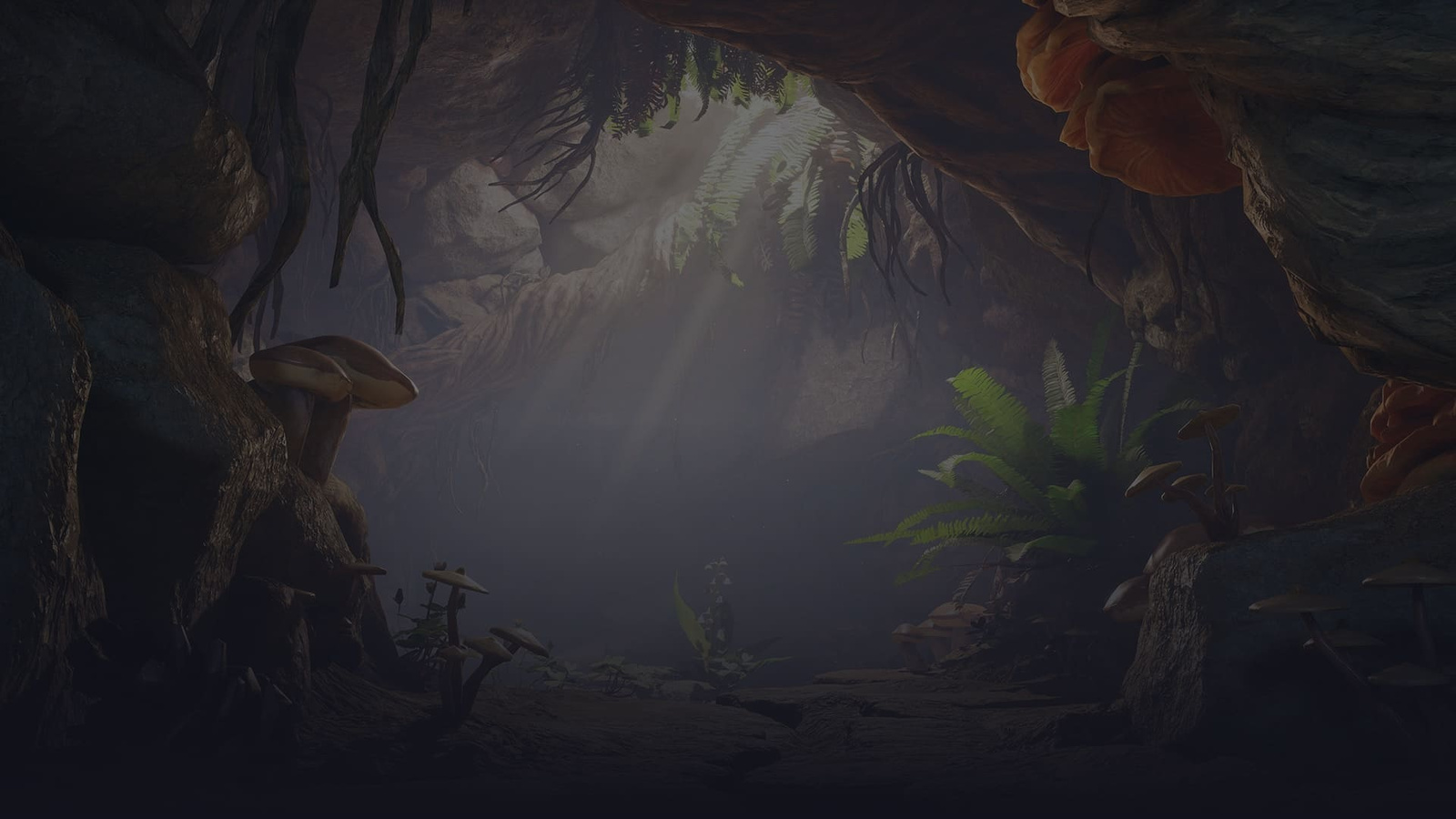
It Takes Two is a story-driven co-op action-adventure that blends 3D platforming, light puzzles, and constant mechanic changes into one tightly paced campaign. The game is built around one core rule: you play it with another person, either in local split-screen or online co-op. Every level is designed to make two players communicate, coordinate, and improvise together.
Story and Setting
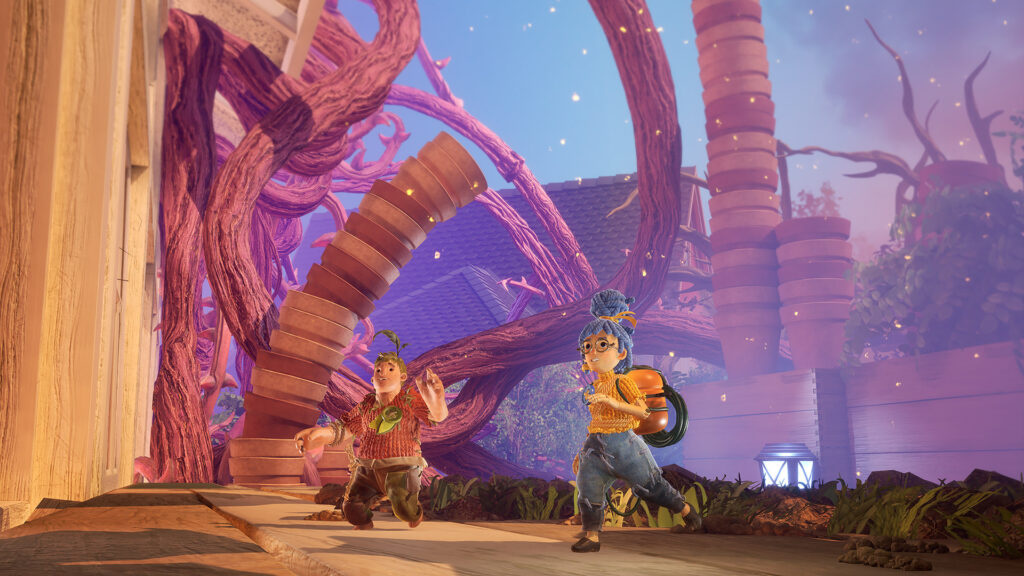
At the center of It Takes Two is a relationship story told through a playful, surreal lens. You follow Cody and May, a couple on the brink of separation, who are transformed into tiny dolls and pulled into a living, shifting world inside their home. Their journey moves through imaginative environments that reflect everyday objects in surprising ways, while the narrative focuses on communication, responsibility, and empathy.
The writing aims to keep the tone accessible and often humorous, but it still builds toward emotional stakes. The story is straightforward to follow, and it’s easy for two players to stay aligned on goals and motivation even across many short play sessions.
It Takes Two — Full Mission Walkthrough
Below is the complete list of story missions in It Takes Two, grouped by chapter.
Use this navigation to jump directly to any mission walkthrough.
Chapter 1 — The Shed
- Shed: Introduction
- A Dusty Job — How to Defeat the Vacuum Tower
- Underpass
- How to Beat the Tool Box
- Under Voltage
Chapter 2 — The Tree
- Fresh Air, Captivity, and Rooting
- How to Beat the Giant Beetle
- Extermination — How to Beat the Wasp Queen
- Escape
Chapter 3 — Rose’s Room
- Pillow Fort
- First Floor — Purple Portal
- First Floor — Red Portal
- Green Portal Trial — Floor 1
- Blue Portal Trial — Second Floor
- Purple Portal Trial — Second Floor
- Orange Portal Trial — Second Floor
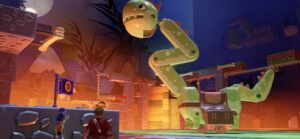
- Astronaut Monkey Boss Fight
- Classics
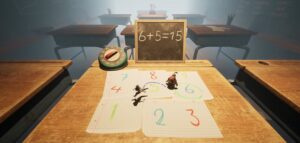
- Classroom Trials to Rose’s Kaleidoscope
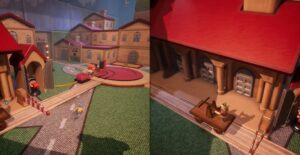
- Railway Station — Figurine Locations & Exit
- Dinozavria — Co-op Platform Puzzle
- Pirates on Deck
- How to Defeat the Giant Octopus
- The Main Performance
- Dungeon Dwellers
- How to Beat the Toy Bull
- How to Beat the King and Queen
- The Queen — Catching the Elephant in the Claw Machine
Chapter 4 — Cuckoo Clock
Chapter 5 — Snow Globe
Chapter 6 — Garden
- Green Fingers
- Weed Whacking in the Garden
- On Foreign Territory — Stealth Cave
- Frog Pond
- Down With Infection
Chapter 7 — The Attic
Co-op First: How the Game Actually Plays
It Takes Two isn’t “a single-player game with co-op added.” It’s designed so that both players are always active, usually doing different things at the same time.
Shared fundamentals
You’ll spend most of the game doing:
- platforming with jumps, dashes, wall runs, grapples, and timing-based movement;
- cooperative puzzles where one player sets something up while the other executes;
- combat and boss encounters that rely on teamwork more than raw reflexes.
Asymmetric abilities (the best part)
A defining feature is that Cody and May often have different tools within the same level. That creates real interdependence: one player might control positioning, while the other handles timing or activation.
This asymmetry keeps co-op from becoming “two people doing the same thing,” and it prevents one player from carrying the entire experience for long stretches.
Level Design and Constant New Mechanics
The game’s pacing is built around variety. Instead of repeating the same combat loop or puzzle format, It Takes Two frequently introduces new mechanics and then discards them before they get old.
You can expect:
- levels that feel like entirely different mini-games back-to-back;
- mechanics that change movement, physics, or the way you interact with objects;
- set pieces that push both players into coordinated sequences.
This approach keeps the campaign feeling fresh, especially for co-op partners who get bored if a game stays too consistent.
Puzzles, Combat, and Boss Fights
Puzzles
Puzzles are generally readable and cooperative rather than abstract. Most solutions come from:
- noticing how each player’s ability complements the other;
- testing interactions quickly, then coordinating execution;
- communicating timing (“go now,” “hold it,” “rotate left,” etc.).
Combat
Combat is present but usually serves the level’s theme rather than becoming a full combat system. Encounters are designed to be manageable for players who aren’t action-game specialists.
Boss fights
Boss fights are one of the game’s highlights because they tend to:
- introduce unique mechanics tied to the chapter’s tools;
- require both players to perform specific roles;
- reward coordination more than perfect aim.
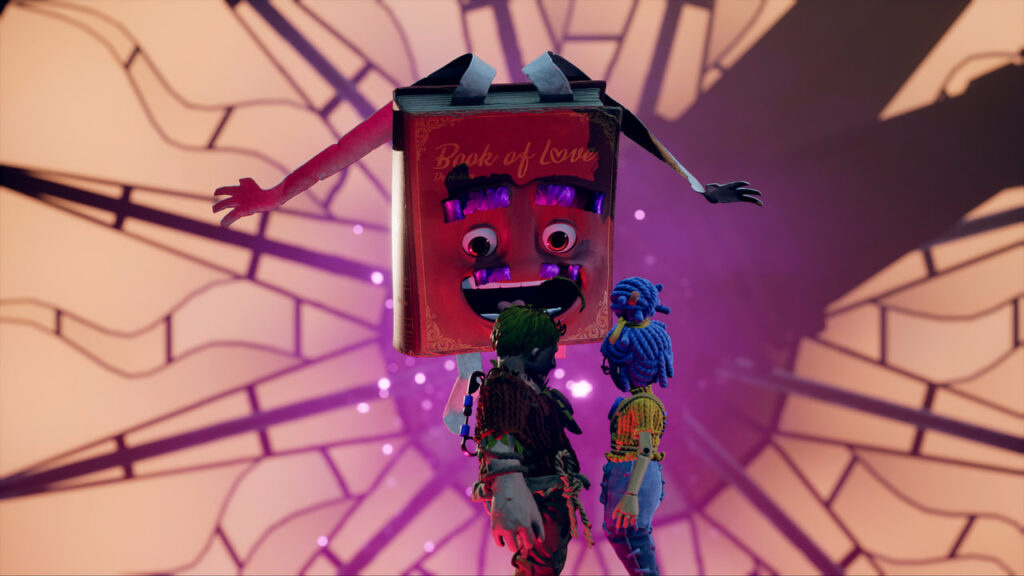
Mini-Games and Side Activities
Throughout the campaign you’ll find optional mini-games that act as short competitive breaks. They’re quick, easy to understand, and fun to revisit, especially if you’re playing with someone who likes variety and friendly rivalry.
These mini-games add:
- pacing relief between longer platforming chapters;
- extra replay value if you want to “best-of” each other;
- a reason to explore corners of levels rather than rushing the main path.
Visual Style, Audio, and Presentation
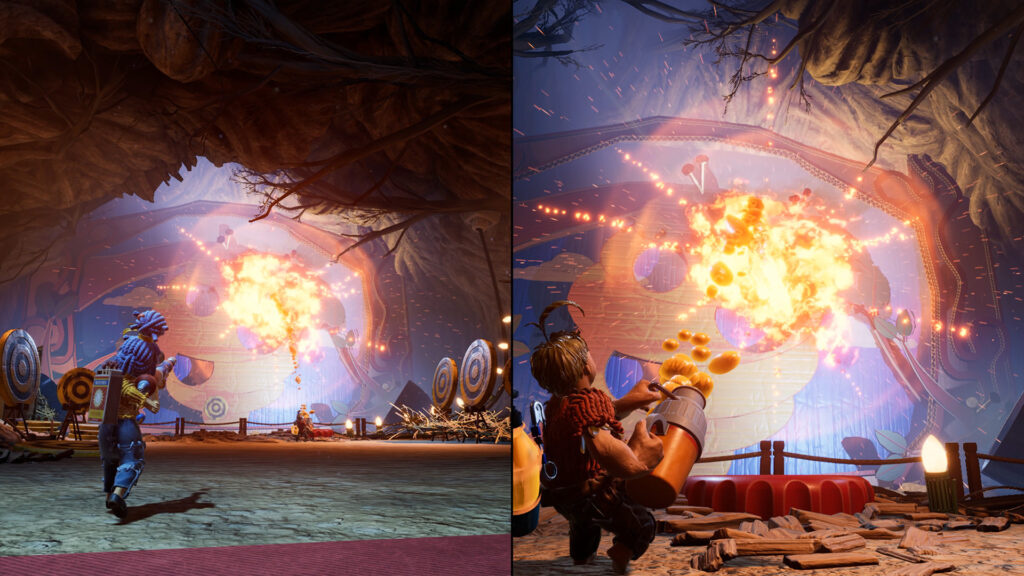
It Takes Two leans into a colorful, handcrafted look that fits its “miniature adventure in a household” concept. Environments are readable in split-screen, with clear silhouettes and interaction cues that help both players stay oriented.
On the audio side, you get:
- clear feedback for co-op actions (successful triggers, timed events, hazards);
- distinct chapter themes that support the changing tone and pace;
- voice acting that keeps the narrative moving without long interruptions.
Difficulty and Accessibility
The game is generally approachable, but it still has spikes where timing or coordination matters more than usual—especially in certain platforming sections and boss phases. The difficulty is less about punishing mechanics and more about learning how to work together.
This makes it a strong pick for:
- couples playing together;
- friends with mixed skill levels;
- players who want a complete co-op campaign rather than endless modes.
Replay Value
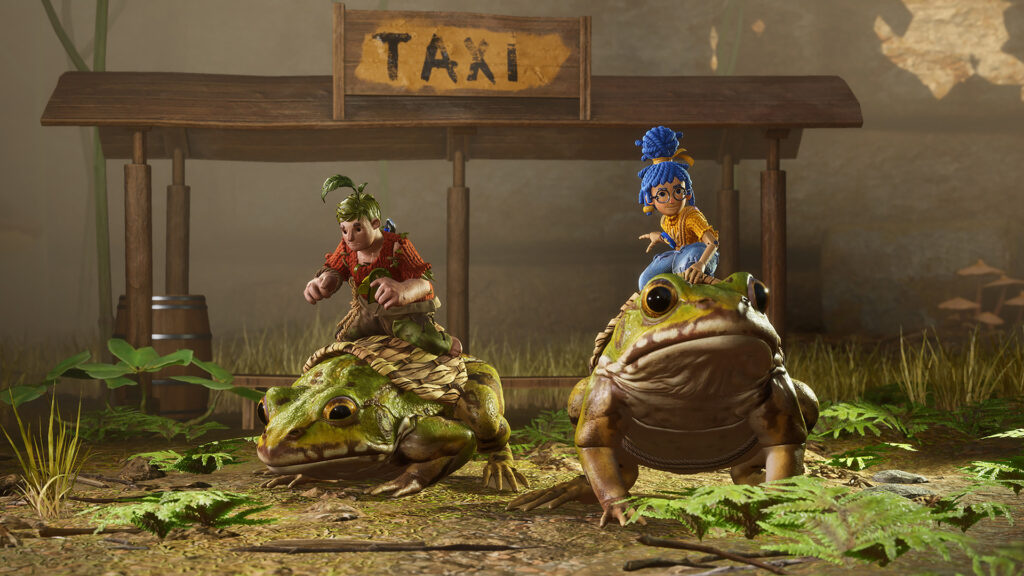
Even after finishing the story, the game remains worth revisiting for:
- missed mini-games and optional interactions;
- replaying standout chapters for the mechanics;
- switching roles (playing the other character) to experience different tools and tasks.
Because each chapter can feel so different, replaying is less repetitive than in many narrative games.
How Long Does It Take to Beat?
Most pairs finish in:
- Main story: ~12–14 hours
- Main story + mini-games/exploration: ~14–16 hours
- Taking it slow, retries, full exploration: ~16–18 hours
If you play in short sessions (1–2 hours), it’s easy to progress without losing the thread of the story.
Who Should Play It Takes Two?
Choose It Takes Two if you want:
- a full-length co-op campaign with real teamwork;
- a game that changes mechanics often and avoids grind;
- split-screen gameplay that works well on a couch or online.
You might skip it if:
- you strongly prefer solo play (co-op is mandatory);
- you want deep RPG progression or open-world systems.




























Comments (0)
Sign In / Sign Up
Sign in to leave a comment.
No comments yet
Be the first one to share your thoughts!